|
|
|
Monday, December 17th, 2018

Poking through 11+ years of posts I find information that’s as useful now as when it was written.
Golden Oldies is a collection of the most relevant and timeless posts during that time.
Are you familiar with tuits? More specifically round tuits?
Round tuits are extremely dangerous. They are disappointing, disruptive, and even destructive.
And they don’t just attack in the workplace; they can cause even worse damage in your personal life, as we’ll discover tomorrow.
Read other Golden Oldies here.
Have tuits invaded your team’s culture?
Have they seeped into your personal culture and infected your values?
Tuit culture is insidious; it usually starts with small inconsequential stuff and then quietly spreads.
If not dealt with immediately it can delay projects, impact vendors, damage customer relationships, substantially increase turnover, especially among your best and brightest, and ruin your street rep.
Are you familiar with the warning signs, so you can take action before tuit culture takes root?
Be warned if you notice any of the following:
- Small tasks aren’t done on time or just aren’t done.
- One or more of your team are slow to respond to requests.
- Individuals and teams find ways of bypassing one or more of their members or bosses.
The best antidotes to tuit culture are vigilance, awareness, transparency and open communications.
Image credit: RampUp Solutions
Posted in Communication, Culture, Golden Oldies | 1 Comment »
Friday, June 22nd, 2018
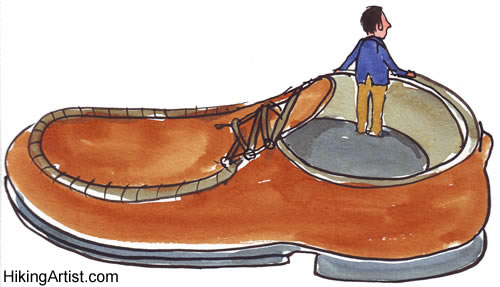
A Friday series exploring Startups and the people who make them go. Read all If the Shoe Fits posts here.
It’s almost impossible to find a company, let alone a startup, that doesn’t swear by agile product development.
But what about applying agile for to other areas, especially other human areas? Specifically, bosses.
We’ve all heard bosses at all levels blather on about creating an agile organization and being an agile leader, but seen little proof they are accomplishing it.
Ever wonder why?
To embrace agile bosses themselves often need to change.
So, while the answer is simple, implementation is not.
As Steve Denning said in 2016, Agile Is A Mindset, Not A Methodology; a few months later he did an excellent job explaining agile beyond its roots.
Consider the basic tenets of agile
- Openness. Be receptive to feedback on your own behavior and activities.
- Trust. Feel comfortable that not everything will be planned; let trial and error show the right direction.
- Collaboration. Go for the greater good of the company, which is not necessarily good for a particular unit.
- No Ego. Have everyone speak with one voice—as an organization.
- Transparency. Call out those unwilling to change or to reflect the “new world.”
- Accountability. Hold one another accountable.
Bosses whose preferred management style runs to command and control, ignore it and hide, benign neglect, or combinations thereof dictated by events are not only uncomfortable with agile, but downright resistant to it.
No one is saying that agile is perfect, but refuting the standard objections is pretty easy.
All of this is just more proof of the accuracy of my company’s tagline: To change what they do change how you think.
Image credit: HikingArtist
Posted in Communication, Culture, Personal Growth | No Comments »
Thursday, February 8th, 2018
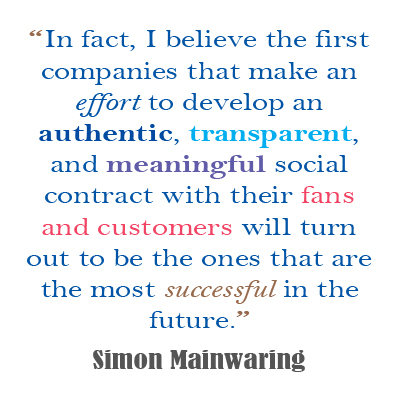
I have been traveling this week visiting clients to advance a few opportunities I am working on. One thing that came up throughout the meetings was the need for authenticity.
It seems to be the result of too many salespeople doing a quick transaction and leaving the customer high and dry after. I was struck by their need. Not so much because I haven’t heard it, but that it is coming up in almost all of my conversations.
As a salesperson, I am always looking for ways to provide value to a client and become their trusted advisor. I’ll be honest, it doesn’t happen overnight, but with some effort and true insight it can be achieved.
We as humans have a responsibility to others to put forth our best, be trustworthy and learn to work together as a team. It was my client, however, who showed me that partnership is what matters most.
It made me think about how does one achieve that partnership?
A lot of it is listening and having the business acumen that can fully understand and address complex issues. Some of it is time spent with someone. Some of it is personality.
Being an authentic human being goes a long way in my book and always putting others needs ahead of your own. Being humble and appreciative will pay off huge dividends.
Beyond sales, how else can we be authentic?
Perhaps it’s taking ownership over a project. Asking for mentorship. Seeking out new people to learn from. Etc.
What do you do to build partnerships and become authentic?
Image credit: Barbara
Posted in Personal Growth, Ryan's Journal | No Comments »
Thursday, December 7th, 2017
 I watched a movie tonight called, “The Circle”, staring Tom Hanks and Emma Watson. (A quick thank you to Amazon and Apple for finally allowing me to stream Amazon Prime to my Apple TV!). I watched a movie tonight called, “The Circle”, staring Tom Hanks and Emma Watson. (A quick thank you to Amazon and Apple for finally allowing me to stream Amazon Prime to my Apple TV!).
If you have not seen the film it is about a tech company in the Bay Area. The company is basically a combination of Google, Amazon, Oracle, and any other major tech company wrapped up into one.
I won’t explain the whole plot, but one overriding theme is that the company knows everything about you.
Your health, likes, friend and family groups, credit history and so on. The company believes that with this knowledge they can help humans live their best selves.
That total transparency will lead an individual to the right path. Secrets are what breaks down society so they must be abolished.
Obviously this is a movie that has some truth in our reality, but is an extreme version of it.
However, it made me think about the current climate of sexual victims coming forward.
In almost all the cases that have been proven the events happened behind closed doors and in secret. The assaulter hid their actions behind a veil and it was only when the victim came forward that some justice was served.
I continue to be bemused that after the victim comes forward the assaulter will release a statement saying this was a mistake and they have learned from it, it shouldn’t define them and so on.
How could transparency have prevented all of this?
I am sure in some cases the acts would have never occurred. The offender would have thought it too risky or perhaps would not have considered it at all since there were no hidden places.
This is more a thought lesson, but I could see how some increased transparency would prevent this type of action.
We have all been victimized at some point. It could be as simple as a playground bully or something much worse. Humanity is not always kind.
However, I also love my privacy and want to live my life outside the view of others from time to time. How do we balance it all?
I’m not sure I have that answer yet, but will continue searching.
Flickr image credit: Alias 0591
Posted in Personal Growth, Ryan's Journal | No Comments »
Tuesday, September 26th, 2017

Last February I wondered if the iconic 1984 Apple Super bowl ad would still feature a woman if it were made today.
There’s been a lot of change since that ad, but for women and people of color much of the pre-2000 progress has regressed.
Fixing that means transforming what-is to what-should-be and management professor and guru Henry Mintzberg offers some of the wisest thoughts I’ve seen on the subject (‘wise’ being very different than ‘smart’).
Transformation requires change — the organization and its culture must transform itself based on a new vision and different core values.
But where to begin? That’s easy: at the “top”. Where else when there’s such pressure. Besides, any chief who has been to a business school or reads the business press knows that it’s all about leadership: the boss who does the thinking that drives everyone else. Louis XIV said “L’état, c’est moi!” Today’s corporate CEO says “The enterprise, that’s me!”
I’m sure we can all think of numerous CEOs who model Louis’ mindset and dozens of them have gone down in the conflagrations they started at the top.
Yesterday’s Golden Oldie revisited Steve Ballmer’s effort to transform Microsoft’s culture by edict. It didn’t work.
Ballmer seemed to channel John Kotter’s eight point approach:
- Establish a sense of urgency.
- Form a powerful guiding coalition.
- Create a vision.
- Communicate the vision.
- Empower others to act on the vision.
- Plan for and create short-term wins.
- Consolidate improvements and produce still more change.
- Institutionalize new approaches.
As Mintzberg points out, this is a top-down, command/control approach that certainly won’t fly well with today’s workforce in spite of being taught at Harvard Business School by a “transformation guru.”
Mintzberg demolishes each point (read his post) and is backed by solid brain science.
…to achieve this result, people throughout the company need to change their behavior and practices, and that can’t happen by simple decree. (…) New behaviors can be put in place, but only by reframing attitudes that are so entrenched that they are almost literally embedded in the physical pathways of employees’ neurons. These beliefs have been reinforced over the years through everyday routines and hundreds of workplace conversations. They all have the same underlying theme: “That’s the way we do things around here.”
The most dynamic, ongoing case study of transformation is being played out publicly at Uber.
It will be interesting to see which approach Uber’s new CEO Dara Khosrowshahi uses.
Image credit: Howard Hecht
Posted in Change, Culture, Ducks In A Row, Personal Growth | No Comments »
Friday, June 23rd, 2017
A Friday series exploring Startups and the people who make them go. Read all If the Shoe Fits posts here.
 The last thing you need today is yet another autopsy of Travis Kalanick. If you indulge in any form of media you know TK isn’t the first to founder to go down in flames (and he won’t be the last)for creating a rotten culture. The last thing you need today is yet another autopsy of Travis Kalanick. If you indulge in any form of media you know TK isn’t the first to founder to go down in flames (and he won’t be the last)for creating a rotten culture.
A larger question is where was the adult oversight that kept other young founders from similar shenanigans?
Steve Jobs didn’t want to create a Windows-compatible version of the iPod or an app store for the iPhone; it was his lieutenants who pushed him to do it. Facebook’s Mark Zuckerberg and the Google founders, Larry Page and Sergey Brin, were guided by strong, experienced and extremely sober operators — Sheryl Sandberg and Eric Schmidt, respectively. Mr. Kalanick, meanwhile, was allowed to operate more or less solo, to micromanage a company that grew to enormous scale, and was left alone even when the firm’s problems became plain to see.
In its fifth year, Facebook had net income of $200 million in 2009 on revenue of $777 million; in its seventh year Uber lost $3 billion.
So instead, I thought I’d point you to a Glassdoor’s 2017 list of best CEOs as rated by their employees, so you could find positive role models.
In the large company category the top slot went to Benno Dorer, CEO of The Clorox Company.
“Excellent communication on vision, strategy, and where we are going. Constant access to leadership through round tables and other company events that allow all employees to feel like they are part of our decision making and strategy.”
In the small/medium category it’s Justyn Howard, CEO of Sprout Social.
There are many reasons why Sprout Social is an amazing place to work. Some of the pros include sensible managers that really care about you and your goals, and help you grow and advance your career. The company culture is inclusive, open and friendly. I have honestly not seen this many talented and hardworking people together prior to working here. Both individual and team initiatives are highlighted and praised often, communication is very transparent and you feel like your voice is heard.
Notice that the employee comments all focus on similar things.
They are what people of all ages want from their bosses.
Founders/bosses set the tone and values.
They shouldn’t be surprised when the people they hire have similar views.
Image credit: HikingArtist
Posted in Culture, If the Shoe Fits, Personal Growth | No Comments »
Thursday, June 8th, 2017

Partnership is an aspect of culture that I think could be explored further.
We all have partners we deal with in life that range from personal to professional. And isn’t it nice to have a partner throughout your day? Someone to help shoulder the burden?
But there is a fine line between a partnership and a parasite and it’s important to remember the distinction.
I work in a partnership daily. My company, Flycast Partners, is a partner of several large scale software vendors. We work hand in hand daily to increase sales, provide services and support. We are essentially an extension of the vendor and work hard on maintaining those partnerships.
This past week my company had the honor of being named partner of the year for North America by BMC software. It was a surprise and unexpected. We are only about 70 strong right now and there are partners that are much larger than we are.
We asked why we were chosen. Was it revenue? Was it the number of accounts we grew? Was it some other tangible thing?
The simple answer was none of that. We didn’t bring in the most revenue or the most new accounts. What we brought was a trusted partnership.
BMC Software is the 7th largest software company in the world and their CEO personally said it was because they knew we acted in the best interest of the customer and BMC.
What drove us to this place?
For one, integrity. The president of my company, Nathan George, believes that you should be honest in all dealings, meet your commitments and do what you say you will do.
He hires based on those criteria. To me these are fairly simple concepts, but not always followed. It would be easy to take the low road sometimes, but not sustainable.
We have competition out there, but we don’t dwell on them. We work on building relationships and providing value.
This is an instance where the partnership benefits both parties.
Next week I will highlight where a partnership can turn parasitic.
Flickr image credit: K-State Research
Posted in Communication, Culture, Ryan's Journal | No Comments »
Tuesday, January 31st, 2017

There’s a lot of talk these days from consultants, academics and executives about the importance of transparency, AKA being totally open and honest.
And many of those in the business world, from team leaders through CEOs, are actually walking the talk.
Or believe they are.
The problem lies in the fact that even those executives who have opened operations, especially financials, to the internal scrutiny of their people don’t recognize that true transparency needs to be a two-way street.
One-way transparency is open to spin — whether intentional or not.
Which, if you stop to think about it, should come as no surprise. It is a normal, human characteristic to put the best face on even the most negative thing.
So how is true, two-way transparency achieved?
By opening yourself to a no-holds-barred Q&A with everybody and forcing yourself to provide the A no matter how uncomfortable.
Harley Finkelstein, COO at Shopify and a new “Dragon” on CBC’s Next Gen Den, among other things, is the perfect role model of what should be called AMA transparency.
The AMA idea has been around for a while.
President Obama broke with convention back in 2012 when he agreed to do an Ask Me Anything — AMA — on the Internet forum Reddit.
But if you think it takes guts to expose yourself to a half hour of inquiries from strangers on the web, try fielding regular sessions of no-holds-barred questions from your own employees — live and on camera. Welcome to our normal routine: the internal AMA.
… While facing questions from my team is tough when I’m in the hot seat, it’s become a crucial tool for building trust as we’ve scaled from hundreds to more than a thousand employees.
I doubt you’ll find a lot of executives willing to do it, because a true AMA isn’t exactly fun for those in the hot seat, as Finkelstein freely admits, but it’s a great way to build trust, ownership/engagement, eliminate fear, etc.
There are plenty of times when I’ve been caught entirely off-guard. But that’s precisely the point. The element of surprise is the secret ingredient that makes the internal AMA such a valuable tool. (…)
Creating a culture where it’s safe to ask literally anything can lead to some awkward moments, but just taking that step helps instill a sense of ownership at every level. Sitting in that hot seat might make you sweat, but that just means you’re doing it right.
Do you have what it takes to “do it right?”
Image credit: Shopify
PS: Shopify is the first site I’ve seen that offers a “download” link next to all their leadership team.
Posted in Communication, Culture, Role Models | No Comments »
Friday, January 13th, 2017
A Friday series exploring Startups and the people who make them go. Read all If the Shoe Fits posts here.
As I’ve said before, Steve Jobs may be a good role model for building a company, but not for building a culture.
Just think what would you could build if you combined the best of Apple’s culture with the best of cultural benchmarks — the way Pearl Automation is doing.
Founded in 2014 by three former senior managers from Apple’s iPod and iPhone groups, Pearl has tried to replicate what its leaders view as the best parts of Apple’s culture, like its fanatical dedication to quality and beautiful design. But the founders also consciously rejected some of the less appealing aspects of life at Apple, like its legendary secrecy and top-down management style.
Pearl’s cultural focus is totally inclusive, based on the idea that, since, every employee is contributing to its success, every employee has a “need to know.”
The start-up, which makes high-tech accessories for cars, holds weekly meetings with its entire staff. Managers brief them on coming products, company finances, technical problems, even the presentations made to the board.
Of course, the first thing you need to do is accept that you are not Steve Jobs.
The next thing is to understand that both creativity and failure are necessary to succeed.
Eswar Priyadarshan, who sold his mobile advertising company, Quattro Wireless, to Apple in 2010 and stayed for four years, said that he learned about design and aesthetics during his time there. But he noted that Apple’s high compensation, focused product mission and top-down decision-making tended to damp the risk-taking necessary to start a company.
Mr. Priyadarshan, who is now chief executive of BotCentral, a six-person start-up, compared Apple to a community of warrior monks. “Warrior monks don’t talk and do whatever is asked,” he said.
The actual question you need to answer is: do you want to lead a team of warrior monks or are you more excited about herding a team of innovative, quirky, creative cats.
Image credit: HikingArtist
Posted in Communication, Culture, If the Shoe Fits, Innovation | No Comments »
Tuesday, August 9th, 2016

A post in Forbes / Entrepreneurs by Jane Chen talks about the importance of knowing your ‘why’.
In my personal experience, this “why” is so important because it helps you rally people behind your mission. It gives you purpose and meaning. It helps you make the right decisions. And when things get hard, as they inevitably will as an entrepreneur, the “why” keeps you going – especially in those moments when you want to give up.
‘Why’ isn’t only for entrepreneurs; it’s always been a high priority item to me personally and should be embedded in every company’s culture.
But finding the ‘why’ isn’t exactly a popular pastime; in fact, for many it’s positively uncomfortable.
Of course, many of the things that are good for us are uncomfortable.
‘Why’ not only provides purpose and meaning, it also spurs innovation, solutions and closure.
So, the next time you are faced with a need for motivation/inspiration or a problem/challenge/angst/confusion find your way past by first identifying the ‘why’.
You may need to go no farther.
Flickr image credit: steve p2008
Posted in Culture, Ducks In A Row, Personal Growth | No Comments »
|
 Subscribe to
MAPping Company Success
About Miki 
Clarify your exec summary, website, etc.
Have a quick question or just want to chat? Feel free to write or call me at 360.335.8054
The 12 Ingredients of a Fillable Req
CheatSheet for InterviewERS
CheatSheet for InterviewEEs™
Give your mind a rest. Here are 4 quick ways to get rid of kinks, break a logjam or juice your creativity!
Creative mousing
Bubblewrap!
Animal innovation
Brain teaser
The latest disaster is here at home; donate to the East Coast recovery efforts now!
Text REDCROSS to 90999 to make a $10 donation or call 00.733.2767. $10 really really does make a difference and you'll never miss it.
And always donate what you can whenever you can
The following accept cash and in-kind donations: Doctors Without Borders, UNICEF, Red Cross, World Food Program, Save the Children
*/
?>About Miki
About KG
Clarify your exec summary, website, marketing collateral, etc.
Have a question or just want to chat @ no cost? Feel free to write
Download useful assistance now.
Entrepreneurs face difficulties that are hard for most people to imagine, let alone understand. You can find anonymous help and connections that do understand at 7 cups of tea.
Crises never end.
$10 really does make a difference and you’ll never miss it,
while $10 a month has exponential power.
Always donate what you can whenever you can.
The following accept cash and in-kind donations:
|