|
|
|
April 8th, 2020 by Miki Saxon

Hi All,
Nothing to do with the Coronavirus, but I decided to take some time off.
I’ve been writing Mapping Company Success since March 2, 2006, just a tad over 14 years.
Thats a long time and I need a break.
Take care, stay safe and I see you soon—probably.
Image credit: Taichiro Ueki
Posted in Personal Growth |
No Comments »
Sphere: Related Content
*/?>
April 6th, 2020 by Miki Saxon
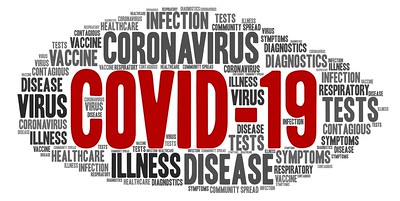 I received the following email from a longtime reader. I received the following email from a longtime reader.
Hey Miki, I read a lot of conflicting information about Covid-19 and I was wondering if you or your contacts had anything to add, whether good or bad.
I don’t feel qualified to comment much, so I reached out to see what more knowledgeable people I know had to say.
One detailed response I thought worth sharing accurately reflects my gut reaction, which was based on nothing more than my growing cynicism.
His, on the other hand, are based on an in depth knowledge of current events, finance and the economy.
The author is a senior guy working on Wall Street. It’s anonymous because he would probably be fired, since his company is close to the powers-that-be, and his opinion and comments are at variance with what they are saying.
I am significantly less optimistic than most people I speak with. However, I believe that the numbers we’re receiving are highly skewed by low testing numbers.
Despite having 3+ months to prepare, we’re caught completely unprepared. Our government has bungled the response in more ways than I can mention. I have 2 siblings in Miami who are health workers, one a surgeon who happens to be professor of surgery and chief surgeon. They are now dressing in plastic bags and going into surgery with bandanas covering their faces instead of masks. It seems to be the same in LA and SF.
The US has about 50 million people without access to healthcare, about 11 million of which are undocumented immigrants. These represent a hidden and significant risk factor that is largely ignored by media and most people in discussing the problem. The US is the only OECD country with this risk factor in such significant numbers. We also do not have a well-functioning primary health system. It means that we essentially do not know how disease is developing in the populace and are unable to devise strong strategies for addressing a pandemic like this (not to mention that the president fired the pandemic response team in 2018).
In China it took 3-4 months to stop the pandemic, and based on recent news past patients are being reinfected. It means that we will be out of this at earliest in another 2-3 months.
There is a significant risk for a 1918 Spanish Flu situation where there was a first wave that was somewhat virulent, but nowhere close to the second wave that came the following autumn that killed up to 6% of the world population. It lasted from January 1918 until December 1920, so this can last for more time than we’re expecting and be worse than we’re now seeing.
However, if we look at the numbers from Germany, which is the only nation that is attempting to test major portions of the population, the mortality rates are well below what we’re seeing elsewhere. This is very hopeful, especially when other numbers seem so bleak.
In China there are at least 5 different strains, and in Iceland they have identified up to 40. This means that it is mutating in different directions. The US response, which is more akin to that taking place in Kenya and Equador than most of the OECD, may have both a positive and negative consequence. It may create herd immunity, while also having a significantly higher mortality rate prior to this happening.
So, to stop my rambling, here are my recommendations:
-
- be conservative in all ways with regard to hand washing, mask wearing, having outside vs. inside footwear, disinfecting doorknobs/light switches, etc.,
- plan for longer time frames of sequestration than the authorities advocate,
- avoid contact with health workers of all types, unless you suspect serious COVID symptoms,
- stock food that lasts, especially frozen vegetables, etc., that give your immune system the ability to function at optimum capacity.
Beyond these immediate health issues, there is a probability for recession/depression, especially considering that the US is consumer driven economy (vs. export or manufacturing driven). Consumers are losing jobs wholesale, and while the Fed is printing money like never before, monetary policies will have limited success considering the record low interest rate. In addition, we still have not addressed the “toxic sludge” from the last recession.
Image credit: EpicTop10.com
Posted in Personal Growth |
No Comments »
Sphere: Related Content
*/?>
April 1st, 2020 by Miki Saxon
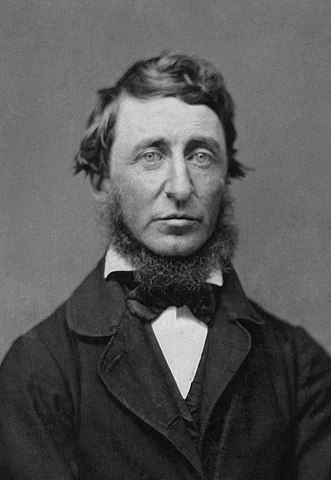
In honor of April Fool’s Day I thought I’d share a gem from Henry David Thoreau.
Any fool can make a rule, and any fool will mind it.
The goal, of course, is to avoid, or at least limit, the time you spend as either the lead fool or the follower fool.
Image credit: Wikipedia
Tags: fool, rules, rules to live by
Posted in Just For Fun, Personal Growth |
No Comments »
Sphere: Related Content
*/?>
March 31st, 2020 by Miki Saxon

The chatter about how AI will change the world, take your job, out-consult the consultants, displace management, perform reviews, identify potential criminals and reoffenders, diagnose illnesses, etc., especially etc., is never ending.
AI is supposed to bring true objectivity to its many applications creating longed for change.
Yet it’s been proven over and over that AI contains the same biases that created our unfair, prejudiced world; not just in the US, but around the world.
AI is good at increasing bias in the name of efficiency and objectivity.
It is even better at automating the loss of privacy and increasing surveillance in the name of safety.
Long before AI got hot Lou Gerstner knew the solution.
Computers are magnificent tools for the realization of our dreams, but no machine can replace the human spark of spirit, compassion, love, and understanding.
Something tech has forgotten in its love affair with data and its warped view of progress.
And, of course, profit.
Image credit: safwat sayed
Tags: AI, bias, big tech, facial recognition, Lou Gerstner, prejudice, privacy, surveillance
Posted in Communication, Culture |
No Comments »
Sphere: Related Content
*/?>
March 30th, 2020 by Miki Saxon

Poking through 14+ years of posts I find information that’s as useful now as when it was written.
Golden Oldies is a collection of the most relevant and timeless posts during that time.
I used to do a feature called Expand Your Mind with links to apropos topics and quick, sometimes snarky, comments. Hmmm, may do it again in the future…dee
Read other Golden Oldies here.
There’s a lot of exciting exploration going on these days in space and under the sea, but some of the most exciting is the ongoing exploration of the human brain.
Most people recognize a certain validity in the old maxim ‘clothes make the person’, but would you believe that clothes can actually improve cognitive ability?
If you wear a white coat that you believe belongs to a doctor, your ability to pay attention increases sharply. But if you wear the same white coat believing it belongs to a painter, you will show no such improvement.
Oh, goody; once again corporate America is hijacking brain research to sell more (just what we all need) stuff.
…neuromarketing…helped researchers decode secrets such as why people love artificially colored snack food and how to predict whether a pop song will be a hit or a flop.
This next essay looks at how love affects your brain and you might wonder about its business application, but the information on how relationships change brain chemistry is as applicable to you and your boss and business colleagues as it is to you and your romantic partner—more so, perhaps, considering the hours spent in work-related relationships exceeds those spent on personal ones.
A RELATIVELY new field, called interpersonal neurobiology, draws its vigor from one of the great discoveries of our era: that the brain is constantly rewiring itself based on daily life.
Have you ever wondered why you acted/reacted a certain way? Could it be because of a cat you have, had or visited at some point?
Jaroslav Flegr believes a “latent” parasite may be quietly tweaking the connections between our neurons, changing our response to frightening situations, our trust in others, how outgoing we are, and even our preference for certain scents.
And before you start laughing, consider the words of Stanford’s Robert Sapolsky,
“My guess is that there are scads more examples of this going on in mammals, with parasites we’ve never even heard of.”
Finally, an all natural, fully organic, multi-useful way to improve brain function—and it’s free! Additional benefits include potentially improved business functions and a myriad of benefits to your social life from more ways to meet chicks/guys to choosing restaurants and enjoying vacations.
Being bilingual, it turns out, makes you smarter. It can have a profound effect on your brain, improving cognitive skills not related to language and even shielding against dementia in old age.
Flickr image credit: pedroelcarvalho
Tags: brain, brain power, brain research, brainstorm, deep thinking
Posted in Expand Your Mind, Golden Oldies |
No Comments »
Sphere: Related Content
*/?>
March 25th, 2020 by Miki Saxon
Looking for a good first-thing-in-the-morning thought to get you going?
Here’s my favorite.
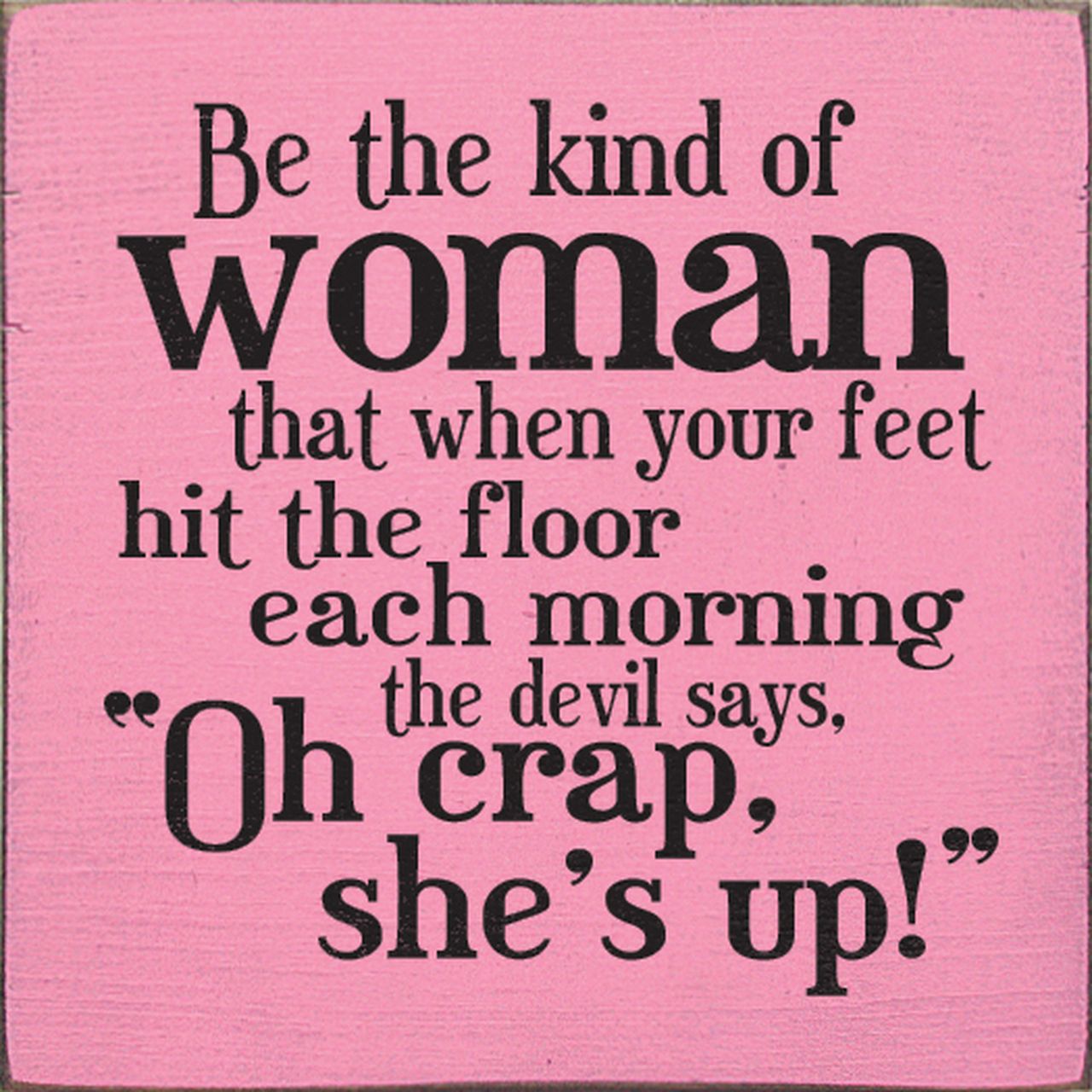
Image credit: Country Market Place
Tags: attitude, fun, inspiration
Posted in Miki's Rules to Live by |
No Comments »
Sphere: Related Content
*/?>
March 24th, 2020 by Wally Bock

This is the post that I mentioned yesterday. As Wally points out so elegantly “do as I say and not as I do” doesn’t work anymore — if it ever did. (BTW, you might find this post on leadership as a profession of interest.)
“There is no leadership without leadership by example.” ~ Captain James Westley Ayers, USMC
Captain Ayers was right. There is no leadership without leadership by example. What he didn’t say is that example can be good or bad. You don’t get any choice about whether you lead by example, only about the kind of example you set.
Most writing about leadership by example assumes a good example. If you work hard, the people on your team will work hard, too. If you’re honest, they will be, too. It’s the way it is. It’s human nature.
Human nature has a baked-in capacity and desire for hierarchy. That’s why you must be careful. It’s easy to set a bad example.
People Are Watching
If you’re the person responsible for the performance of a group, the other members watch you. That’s because you have some power over them. It may not be much, but it’s there. They watch what you do as a guide to what they should do.
Everyone I know who’s been promoted in large organizations has some version of the same story. A leader does something without much thinking about it and people take it as a guide to behavior. The story I like best is the one told by Linda Hill about when she was promoted to President of General Dynamics.
She went shopping for a new suit to celebrate her promotion. The salesperson sold her a scarf with the suit and showed her an interesting way to tie the scarf. She wore the suit and the scarf, tied in that special way, her first day on the job. What happened, in Ms. Hill’s own words.
“And then I came back to work the next day and I ran into no fewer than a dozen women in the organization who have on scarves tied exactly like mine.”
Another friend tells about his first day on the job as plant manager. He made several casual comments about how they could move equipment to be more effective. The next day, when he went to the plant, he found that all his “ideas” had been implemented overnight.
Then, there was the friend who forgot to get his usual morning coffee on the way to the office on his first day in a new position. When he realized what he’d done, he said out loud to himself, in his office, “God, I wish I had some coffee.” Within minutes, three cups of coffee arrived.
Be careful what you do and what you say. People are watching.
Be Careful What You Praise
Praise is a power tool. You use it so that people will do things or keep doing things that you want them to do. We love praise. Just remember, people are listening.
You will get more of what you praise. If you praise great ideas, you will get more of them. If you praise courage, people are likely to be more courageous. But if you praise people who work long hours. other people will start putting in more time. If you praise people who answer email in the middle of the night, folks will start sleeping with their phone by the bed.
How Do You Act When Things Don’t Go Your Way?
Some things will not work the way you’d hoped. Some news will be bad news. How you act tells your team members some important things.
If you receive bad news gracefully and take it as information, people will be more likely to bring it. Even more, if you thank them for letting you know. People don’t mind being the messenger that gets praised for doing a good deed. They don’t want to be the messenger who gets killed.
When you’re interrupted it’s another opportunity to set a good example. Treat the people who interrupt you with respect and courtesy. Then, if the interruption is inappropriate, tell them why.
What You Tolerate, You Condone
It’s hard to do, but you need to address behavior or performance that violates your standards or values.
Mark Deterding tells a story from early in his career. Mark was in his mid-twenties, when he was transferred and promoted to plant manager. During his first few meetings, he was struck by the amount of swearing by the seasoned veterans on his team.
He decided he would just model the right way and his team members would change. But it didn’t work that way. They went right on swearing. Here’s the lesson Mark said he learned.
“It’s not enough to just model the way. It’s just as important to clearly and immediately address any issues that violate the values of the organization. When you allow unacceptable behaviors to go unaddressed, you send the message that the behavior is okay.”
Bottom Line
When you lead by example, you use your behavior to influence the behavior and performance of team members. Your influence is a leadership superpower. And, like any superpower, you can use it for good or for evil. What’s your choice?
Image credit: Wally Bock
Tags: leaders, praise, walk your talk, Wally Bock
Posted in Culture, Leadership, Personal Growth |
No Comments »
Sphere: Related Content
*/?>
March 23rd, 2020 by Miki Saxon
Poking through 14+ years of posts I find information that’s as useful now as when it was written.
Golden Oldies is a collection of the most relevant and timeless posts during that time.
I was reminded of this article after reading one by Wally Bock that I will share tomorrow. I’ve always found it interesting that certain words, such as influence, are assumed positive, while manipulation is negative.
Read other Golden Oldies here.
There is a dangerous assumption out there that ‘leaders’ are chuck full of positive traits and on the side of the angels, but I’m here to tell you that it ain’t necessarily so. Just as leaders come in all shapes, colors and sizes they come with a wide variety of traits, not all of them positive. But it seems as if succession is tough all over.
Italian police have caught the Sicilian Mafia’s number two, the latest in a string of top-level arrests that has given the crime group that once terrified Italy problems with rebuilding its leadership.
The hero CEO who will save the company easily morphs into the imperial CEO. An intelligent, thoughtful opinion piece by Ho Kwon Ping in Singapore considers the dangers of this happening and assumes it will continue in the US—and it probably will.
The leadership of any company is critical to the success of its mission — but no one individual is mission-critical.
Yesterday I wrote Real Leaders are Fair, which means applying rules equally, but that rarely happens, especially when a government is involved and ours is no different. Consider the non-application of a federal law backed by a presidential proclamation that prohibits corrupt foreign officials and their families from receiving American visas. But business interests always seem to trump fairness.
“Of course it’s because of oil,” said John Bennett, the United States ambassador to Equatorial Guinea from 1991 to 1994, adding that Washington has turned a blind eye to the Obiangs’ corruption and repression because of its dependence on the country for natural resources. He noted that officials of Zimbabwe are barred from the United States.
Finally, on a lighter note, I found the answer given by Ask the Coach to this question to be classic.
Q: I am having a difficult time leading my team. The team members will not follow my instructions, which I am sure would make our project much more successful. What am I doing wrong?
A: What you’re doing wrong is very simple: you have simply forgotten that your team is more critical to the success of your project than you are.
Take a moment and read the whole post, I guarantee you’ll like what you learn.
And if you want more of my picks you’ll find them here.
Tags: CEOs, fair, imperial CEO, lead, lie, trust
Posted in Golden Oldies, Leadership |
No Comments »
Sphere: Related Content
*/?>
March 18th, 2020 by Miki Saxon

Nobel Prize-winning theoretical physicist Richard Feynman (deceased) provides words that should be taken to heart.
 No further comment is necessary. No further comment is necessary.
Hat tip to CB Insights for sharing it.
Image credit: Wikipedia
Tags: know thyself, stupid, stupidity
Posted in Just For Fun |
No Comments »
Sphere: Related Content
*/?>
March 17th, 2020 by Miki Saxon

A couple of years ago I wrote
A corporation isn’t an entity at all. It’s a group of people, with shared values, all moving in the same direction, united in a shared vision and their efforts to reach a common goal.
Lou Gerstner, who remade the culture at IBM, most famously said,
I came to see, in my time at IBM, that culture isn’t just one aspect of the game, it is the game.
The culture continued to change when Sam Palmisano took over.
…the biggest breakthroughs are a result of changing the business model and the processes and the culture.
Microsoft’s Steve Ballmer learned the hard way that culture can’t be changed by edict, whereas Satya Nadella’s approach succeeded.
Over the last year, 110,000 strong Intel has been changing under the leadership of Robert Swan, who considers the cultural change necessary for its survival.
Its culture badly needed an overhaul, and its 110,000 employees needed to confront issues more openly.
“If you have a problem, put it on the table,” said Mr. Swan, 59, who was promoted to the top job a year ago and has since embarked on a campaign to shake up the Silicon Valley giant.
His efforts remain a work in progress. But the changes — some of which lean on the precepts of Andrew S. Grove, the former Intel chief executive who coined the credo “Only the paranoid survive” — are Intel’s biggest attitude adjustment in decades.
The underlying cause is the same as Gerstner and Nadella faced at their companies: complacency.
Complacency, from years of dominating their markets, and silos, from internal distrust and myopic communications.
Intel was the same.
Intel also had deeply rooted problems reflecting its years of dominance, Mr. Swan said. Managers, complacent about competition, battled internally over budgets. Some of them hoarded information, he said.
These are the same problems that companies of all sizes face.
No matter how dominant times change and competitors can seize the day.
While success is often seen as a case of “us” vs. “them” it’s crucial to remember that “us” includes customers, partners and all parts of the company.
Image credit: Aaron Fulkerson
Tags: Andy Grove, IBM, Intel, Lou Gerstner, Microsoft, silos, Steve Ballmer
Posted in Culture |
No Comments »
Sphere: Related Content
*/?>
|
 Subscribe to
MAPping Company Success
About Miki 
Clarify your exec summary, website, etc.
Have a quick question or just want to chat? Feel free to write or call me at 360.335.8054
The 12 Ingredients of a Fillable Req
CheatSheet for InterviewERS
CheatSheet for InterviewEEs™
Give your mind a rest. Here are 4 quick ways to get rid of kinks, break a logjam or juice your creativity!
Creative mousing
Bubblewrap!
Animal innovation
Brain teaser
The latest disaster is here at home; donate to the East Coast recovery efforts now!
Text REDCROSS to 90999 to make a $10 donation or call 00.733.2767. $10 really really does make a difference and you'll never miss it.
And always donate what you can whenever you can
The following accept cash and in-kind donations: Doctors Without Borders, UNICEF, Red Cross, World Food Program, Save the Children
*/
?>About Miki
About KG
Clarify your exec summary, website, marketing collateral, etc.
Have a question or just want to chat @ no cost? Feel free to write
Download useful assistance now.
Entrepreneurs face difficulties that are hard for most people to imagine, let alone understand. You can find anonymous help and connections that do understand at 7 cups of tea.
Crises never end.
$10 really does make a difference and you’ll never miss it,
while $10 a month has exponential power.
Always donate what you can whenever you can.
The following accept cash and in-kind donations:
|