|
|
|
Tuesday, February 19th, 2019

Receiver Larry Fitzgerald, entering his 15th season, said this is the advice he’d like to give rookies.
God gave you two ears and one mouth for a reason. Listen twice as much as you talk. You learn a lot more when you’re listening.
Wally Bock quoted the same thing in a recent post.
Describing a manager who made a major hiring error that went uncorrected, I commented , that he couldn’t hear and wouldn’t have listened anyway.
Of course, it’s easier to talk than listen.
And you can’t really listen if you are looking at your phone.
Or doing anything on your computer.
Or thinking about where to go to lunch or what to make for dinner.
Or thinking about what you want to say as soon as the other person shuts up.
In other words, you can’t listen, really listen if you’re multitasking.
I might end this post with Wally’s high-level, positive summing up.
Listening is a critical leadership skill you can master. It will help you learn about the people you work with, demonstrate you think they’re important, and help you make better decisions.
But my take is low-level simple.
Knowing and practicing good listening is a great way to avoid being the lead character in Bob Sutten’s book The No Asshole Rule.
Image credit: Alan Goudy
Posted in Communication, Culture, Ducks In A Row, Personal Growth | No Comments »
Wednesday, September 12th, 2018

Even if your sights are set on a goal far beyond $85 million in revenue (not valuation), you would be wise to take a lesson from Michael Kiolbassa, whose product you’ve probably eaten more than once.
Grandson of the founder, Kiolbassa wasn’t prone to delegating. He did listen to advice from a wide range of pundits and was prone to “management by bestseller.”
Until, that is, the company was blindsided with a giant cost increase that should have been forecasted, but wasn’t.
For years, he saw his role as the solver of all problems. That’s what he’d learned from his dad, who would even fix the machinery. “I’m the production guy,” Michael explained to a consultant in 2010. “I’m the sales guy. I’m the culture guy. I’m the guy.”
“Is it working for you?” the consultant asked.
“No, it’s not.”
That’s when things changed and he started delegating.
Sales soared as did production, but not in concert, so the losses almost killed the company.
That’s when Kiolbassa was introduced to open-book management, which he embraced, with a quarterly bonus incentive for everybody, and everything changed.
“I got everybody together, shared the financials in detail and showed them just how much money had been lost,” says Michael. “They had no idea.” (…) Posted in Spanish as well as English, the financial displays let everyone track whether the company is likely to pay a quarterly profit-sharing bonus
And that’s the key that most CEOs don’t get.
There is a wealth of information at every level within every organization, not just from those with fancy titles, if you are willing to listen.
“Suddenly,” says Michael Johnson, a Kiolbassa vice president, “you had guys on the shipping dock looking at invoices and saying, I know we can get jalapenos cheaper.”
Proof, as is said, is in the pudding, or, in this case, the financials.
In fact, they turned the first quarter of 2018 into the company’s most profitable ever, with revenue growth of 30% and a profit margin of 6%.
Think what open-book management could do for your company — if you have the guts to implement it.
Image credit: Kiolbassa Smoked Meats
Posted in Culture, Role Models | No Comments »
Tuesday, June 26th, 2018
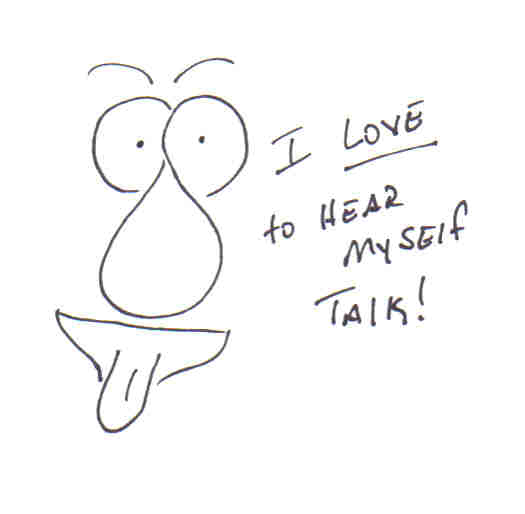
Bosses spend inordinate amounts of time, and often money, working on improving their management skills, frequently turning to the latest “thought leader” for insightful new approaches.
But trendy isn’t always good and frequently it isn’t even new.
Rather than spending your time listening to a varying roster of pundits, why not get it straight from the proverbial horse’s mouth. i.e., your workers.
Ask anyone at any level what they love most about their boss and, in one form or another, they’ll say “they listen.”
Ask what they hate and some version of “they don’t listen” usually tops the list.
Listening isn’t rocket science, but it is one of the smartest, most formidable skills you can develop that will also serve you in a myriad of situations well beyond your role as a boss.
Ironically, it’s not the actual listening that people find so daunting. Rather it’s the pre-listening step that trips so many up.
So, if your goal is to listen, then you must practice its anagram, which is to be silent.
The first is impossible without doing the second.
In other words, your ears turn off when your mouth is running.
As I said earlier, not rocket science.
Image credit: Steve Heath
Posted in Communication, Motivation, Personal Growth, Retention | No Comments »
Wednesday, January 10th, 2018

I’ve written a lot on the both the why and how of face-to-face communications, so today will be a short post, with links to previous content.
Do you wonder why 69% of managers aren’t comfortable talking with their team?
Perhaps it’s because they aren’t comfortable talking period.
What’s going on? What happened to verbal communications a la conversation?
It’s not just tech, although tech has made it much worse.
Modern managers have avoided discussions with employees, especially about performance issues.
Before computers they tried to manage by memo; post computer by email and most recently by texting. None of them work.
Problem 1: screens kill empathy and empathy underlies all positive human interactions.
Solution: Turn off your screens. And if you believe everything will fall apart if you are unavailable for 20 minutes here and 40 minutes there each day then your organization is in far worse shape than you realize.
Problem 2: AMS; it stands for assumption, manipulation, self-fulfilling prophesy.
Solution: Build internal awareness of your AMS (we all do it), then work to control it. Don’t try to completely eradicate it; it’s a waste of effort.
Problem 3: Two-way street.
Solution: Learn to listen, not just hear. Active listening is at least 50%, often more; if you talk, but don’t listen it isn’t a conversation.
Good communicating is like writing good code.
You can study it forever, but eventually you need to get out there and just do it.
And the more proficient you become the more you will enjoy it.
Scary? Sure.
But not nearly as scary as stunting your future, both at work and in your wider world.
Image credit: Flickinpicks
Posted in Communication, Motivation, Personal Growth, Retention | No Comments »
Monday, June 19th, 2017
It’s amazing to me, but looking back over more than a decade of writing I find posts that still impress, with information that is as useful now as when it was written.
Golden Oldies are a collection of what I consider some of the best posts during that time.
When I wrote this originally it was aimed directly at entrepreneurs, especially the ones who don’t seem to hear their people very often — if at all.
Coming across it five years later I decided it’s so apropos across the board that it definitely qualified as a golden oldie.
Read other Golden Oldies here.
A Friday series exploring Startups and the people who make them go. Read all If the Shoe Fits posts here
 Last year I wrote about Tony Hsieh’s approach to employee empowerment, featuring some great quotes from him. Last year I wrote about Tony Hsieh’s approach to employee empowerment, featuring some great quotes from him.
As I said then, the thing that sets Hsieh apart is security.
Hsieh is comfortable in his own skin; secure in his own competency and limitations, so he doesn’t need to be the font from which all else flows.
Entrepreneurs can learn from this.
Startup hiring usually comes in waves as the company progresses.
While most founders will listen to their initial team and first few hires, those hired later often find it difficult to get their ideas heard.
Unfortunately, this behavior often sets a pattern, with the ideas and comments of each successive wave becoming fainter and fainter and those employees less and less engaged—and that translates to them caring less and less about your company’s success—call it wave deafness.
Wave deafness is costly.
Costly in productivity and passion, but even more costly in lost opportunities.
As Hsieh points out, there is no way he can think of as many good ideas as are produced if each employee has just one good idea in a year.
And not just from certain positions. I never heard of a manager, let alone a founder, admit to hiring dummies for any position, no matter the level.
So if you hire smart people and don’t listen to them, who is the dummy?
Image credit: HikingArtist
Posted in Culture, Golden Oldies, Personal Growth, Retention | No Comments »
Monday, May 1st, 2017
It’s amazing to me, but looking back over more than a decade of writing I find posts that still impress, with information that is as useful now as when it was written.
Golden Oldies is a collection of some of the best posts during that time.
Often the most important stuff we need to learn doesn’t require multiple videos, books, and coaching. Sometimes a simple memory aid that’s easy to remember will do it, although execution still requires effort and self discipline, as in this case.
Read other Golden Oldies here.
 An executive once asked me what the single most import thing he should do and how best to do it. An executive once asked me what the single most import thing he should do and how best to do it.
I told him the answer was simple and the key to execution was found in an anagram of the act.
Can you guess the action and anagram?
The action is to LISTEN.
The anagram is SILENT.
The first is impossible without doing the second.
Flickr image credit: RebeccaBarray
Posted in Communication, Golden Oldies, Personal Growth | No Comments »
Thursday, November 17th, 2016

For years I’ve interacted with entrepreneurs from the US and other countries. And while they have many traits in common, there is one that never ceases to amaze me — their approach to their users.
Maybe ‘approach’ is the wrong word; perhaps attitude or interpretation or wishful thinking is closer.
Your users are who they are, not who you want them to be.
That means it doesn’t matter if you/your friends/peers think it’s cool.
Or that you/your friends/peers like the style/fashion/etc.
That’s why Lean Methodology says to get out of your office, your comfort zone, and talk to your market.
Actually, rather than talking, you should listen to your market.
Truly listen.
Hear what they are really saying, instead of hearing what you want to hear.
Doing the latter has sunk many a startup.
Be sure to come back tomorrow for a look at some of them.
Image credit: Ky
Posted in Entrepreneurs, Personal Growth | No Comments »
Tuesday, October 18th, 2016
 *click image to read John Legere is not your typical big company CEO. Legere is an ancient 58 year-old leading a company filled with Millennials in a market driven by them.
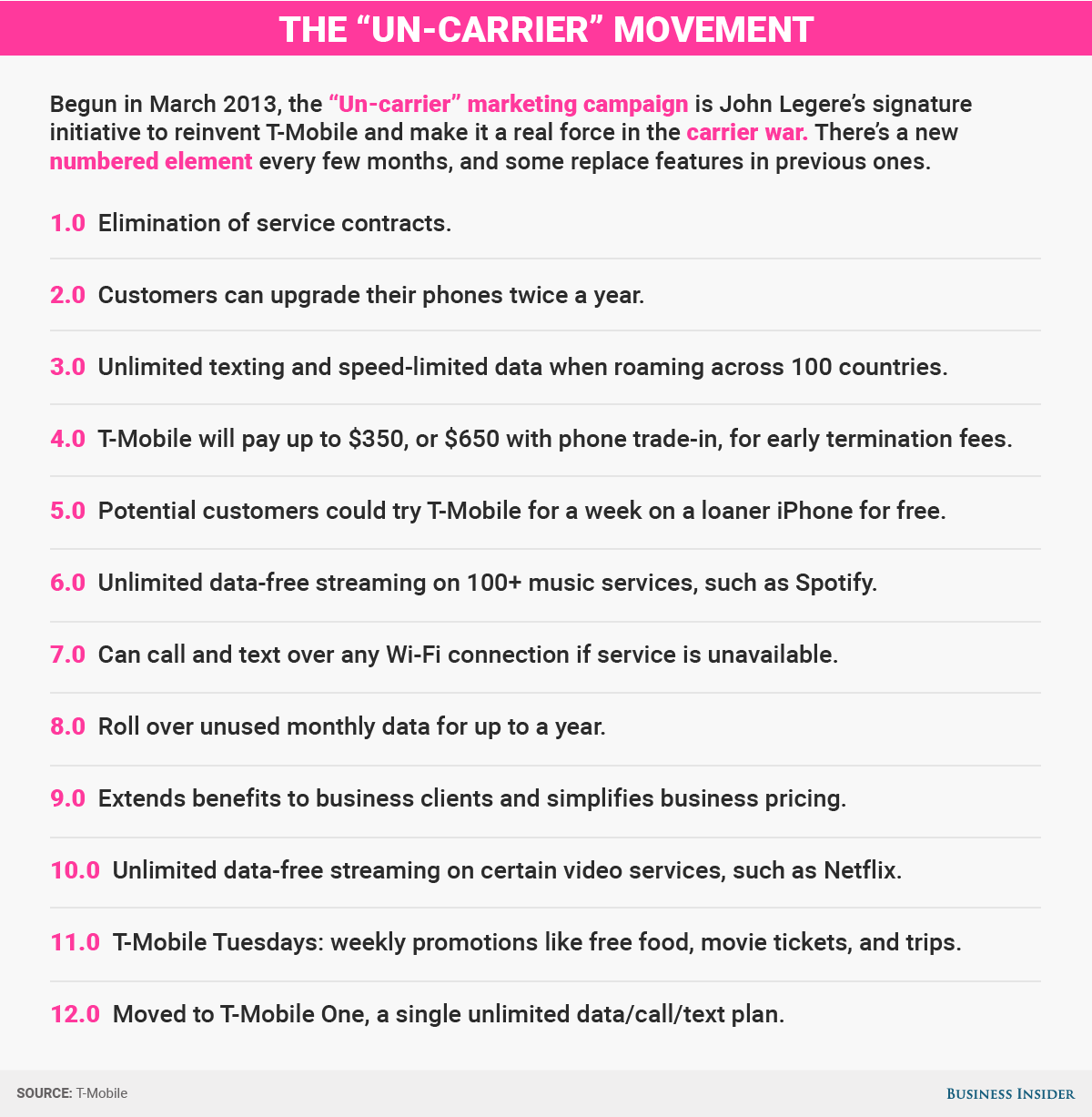
Perhaps he should be termed the “un-CEO,” just as he is branding T-Mobile as the “un-carrier.”
… his mission to turn T-Mobile into an Un-carrier — essentially the opposite of any other mobile company.
The interview with him is worth reading, especially if you want to learn how to compete against brands (AT&T and Verizon) that are better known and far richer and successfully lead people who are not like you.
In just four short years he has taken Deutsche Telekom owned T-Mobile from a joke to the third-largest and fastest-growing carrier in the US.
Not too shabby.
He radically changed the culture, and, as he says, “set out to solving customer pain points in an attempt to fix a stupid, broken, arrogant industry.”
And not just with talk; but with an additional million square miles of LTE and new services, such as Binge On (unlimited streaming at 480p quality from services like Netflix), forcing competitors to follow suit.
His advice to business school students is something that anybody at the helm of any company, from the the corner dry cleaner to the Fortune 5, should embrace.
“I can summarize everything you need to know to lead a major corporation. Are you prepared to write this down?” And then they get all ready. I tell them I can summarize how I succeed as a leader: Listen to your employees, listen to your customers, shut the f— up, and do what they tell you. Then I say that the genius of the marketing strategy that we’ve had in every company that I’ve ever been in, is that if you ask your customers what they want and you give it to them, you shouldn’t be shocked if they love it.
Ask your customers. Listen to your customers. Give your customers what they want.
Definitely rocket science.
Image credit: T-Mobile via BI
Posted in Communication, Culture, Ducks In A Row, Leadership | No Comments »
Monday, November 30th, 2015
It’s amazing to me, but looking back over nearly a decade of writing I find posts that still impress, with information that is as useful now as when it was written. Golden Oldies is a collection of what I consider some of the best posts during that time. Read other Golden Oldies here
When Execution is an Anagram of the Act
An executive once asked me what the single most import thing he should do and how best to do it.
I told him the answer was simple and the key to execution was found in an anagram of the act.
Can you guess the action and anagram?
The action is to LISTEN.
The anagram is SILENT.
The first is impossible without doing the second.
Flickr image credit: RebeccaBarray
Posted in Golden Oldies, Personal Growth | No Comments »
Monday, November 9th, 2015

This post first appeared in 2012, but I believe both its premise and its point deserve another airing.
Managing Weeds
As companies grow and managers build their organizations they frequently talk about “weeding out” low performing employees—Jack Welch was a ninja weeder.
If that thought has crossed your mind you might take a moment to think about James Russell Lowell’s comment, “A weed is no more than a flower in disguise.”
As with weeds, there are better ways to look at under-performing employees.
Seeing a weed as food changes everything, just as seeing people’s potential does.
95% of the time it’s management failures that create weeds and those failures run the gamut from benign neglect to malicious abuse and everything in-between.
Weeds can come from outside your company, inter-departmental transfers and even from peers in your own backyard.
What is amazing is how quickly a weed will change with a little TLC.
“Weeds can grow quickly and flower early, producing vast numbers of genetically diverse seed.”
People grow quickly, too, and often produce innovative ideas — just because someone listened instead of shutting them down.
And while trust that your attitude won’t change takes longer to build, the productivity benefits happen fairly rapidly.
So before you even think about weeding look in the mirror and be sure that the person looking back is a gardener and not a weed producer.
Flickr image credit: Clare Bell
Posted in Communication, Personal Growth, Retention | No Comments »
|
 Subscribe to
MAPping Company Success
About Miki 
Clarify your exec summary, website, etc.
Have a quick question or just want to chat? Feel free to write or call me at 360.335.8054
The 12 Ingredients of a Fillable Req
CheatSheet for InterviewERS
CheatSheet for InterviewEEs™
Give your mind a rest. Here are 4 quick ways to get rid of kinks, break a logjam or juice your creativity!
Creative mousing
Bubblewrap!
Animal innovation
Brain teaser
The latest disaster is here at home; donate to the East Coast recovery efforts now!
Text REDCROSS to 90999 to make a $10 donation or call 00.733.2767. $10 really really does make a difference and you'll never miss it.
And always donate what you can whenever you can
The following accept cash and in-kind donations: Doctors Without Borders, UNICEF, Red Cross, World Food Program, Save the Children
*/
?>About Miki
About KG
Clarify your exec summary, website, marketing collateral, etc.
Have a question or just want to chat @ no cost? Feel free to write
Download useful assistance now.
Entrepreneurs face difficulties that are hard for most people to imagine, let alone understand. You can find anonymous help and connections that do understand at 7 cups of tea.
Crises never end.
$10 really does make a difference and you’ll never miss it,
while $10 a month has exponential power.
Always donate what you can whenever you can.
The following accept cash and in-kind donations:
|