|
|
|
Archive for June, 2008
Monday, June 30th, 2008
Post from Leadership Turn Image credit: danzo08
 No matter your position, if you’re one of the go-to people then you need to know about “emotional contagion” and how your moods affect those around you. Although much of the research has focused on emotionally negative or positive bosses, it’s actually leaders, whether bosses or not, who have the most impact. No matter your position, if you’re one of the go-to people then you need to know about “emotional contagion” and how your moods affect those around you. Although much of the research has focused on emotionally negative or positive bosses, it’s actually leaders, whether bosses or not, who have the most impact.
Yup, now there’s proof for what all of us who’ve been exposed to “glass half empty” people already know—negative emotions, especially in leaders, can bring a group down faster than bad ventilation during flu season.
So if you’re a person of influence you need to stay aware of your own mood. Sure, it’s difficult to be upbeat when you walk out of a meeting with an enraged client, or a design review for a project about to go over budget or a difficult review, but if you don’t, you’ll bring down the rest of your team and that’ll blow off the entire day (or week or even longer).
Overcome your mood using a simple approach that I first learned from a book by Napoleon Hill more years ago than matters. He said, “Think, act, walk and talk like the person you want to become and you’ll become that person,” and “Act enthusiastic and you’ll become enthusiastic.”
Put them together and you have an unbeatable, simple, solution for keeping your own morale and, as a result, the morale of your team, positive and productive. and productive.
The approach may seem simplistic, but oft times simple is best. After all, you’re not trying to solve the cause, but to mitigate the effect.
How do you deal with a bad mood?
Your comments—priceless
Don’t miss a post, subscribe via RSS or EMAIL
Posted in About Leadership, Followers, Group Dynamics, management, Personal Development | 4 Comments »
Monday, June 30th, 2008
Image credit: robchivers
Want to know what people are really thinking about the hottest topics in the workplace? Then check out Business Week’s massive discussion of the top six topics. Business Week’s massive discussion of the top six topics.
The six topics are the result of voting by 8500 people; they are
- Work-Life Balance
- Staying Entrepreneurial
- Time Management
- Negotiating Bureaucracy
- Toxic Bosses
- Generational Tension
“…now we’re looking for solutions. Starting today, you can submit comments, essays, pictures, or videos chronicling the challenges you face in any of the categories—and how you’ve tried to resolve them. At the end of June, BusinessWeek writers and editors will use the material, along with the input of experts, to produce a precedent-setting multimedia package—with content and videos online beginning Aug. 14, the Special Issue in mailboxes Aug. 15, and broadcast segments appearing on BusinessWeek TV Aug. 16 and 17.”
My apologies for bringing this information to you so late, but you still have today. And I will bring you more on the discussion as it develops.
Posted in Business info, Communication, Culture, Leadership, Personal Growth | No Comments »
Sunday, June 29th, 2008
Post from Leadership Turn Image credit: bradimarte
 I cleaned out a ton of files today (it was way too hot to go outside) and came across three mildly sexy comments from Richard Branson, Einstein, and Francis Koenig, so I decided to make today sexy comment day. I cleaned out a ton of files today (it was way too hot to go outside) and came across three mildly sexy comments from Richard Branson, Einstein, and Francis Koenig, so I decided to make today sexy comment day.
“You’ll have at least two ways to get lucky on our flights.” –Richard Branson on his airline’s offering casinos and double beds on it six new Airbus A380 planes. (How lucky are you?)
“When you are courting a nice girl an hour seems like a second. When you sit on a red-hot cinder a second seems like an hour. That’s relativity.” –Albert Einstein (Imagine this translated into today’s language.)
“It’s a market untapped by Wall Street… There are 6 billion people on the planet, and most of them participate in adult entertainment.” — Francis Koenig CEO AdultVest (for those of you who don’t know, AdultVest is a $7.9 billion hedge fund that is dedicated to the adult entertainment industry, including buying iPorn.com—no relation to the iPhone. (A lot more stable and profitable than mortgages.)
What can you add to the collection?
Your comments—priceless
Don’t miss a post, subscribe via RSS or EMAIL
Posted in Leadership Quotes, Quotable Quotes | 4 Comments »
Saturday, June 28th, 2008
Post from Leadership Turn Image credit: Henkster
I frequently disagree with Jack and Suzy Welch in their weekly Business Week column, but in The Connected Leader they offer up good insights as to the effect of the internet on leaders, i.e., bosses, in terms of what it can and can’t do as well as what the leader needs to do.
 “The Internet…ushers in a whole new level and scope of employee engagement. Leaders should welcome this development, and most do, but it’s a mistake to treat it lightly. Once employees engage you by speaking out, albeit electronically, they expect to hear back. We would suggest that it can be just as damaging for a leader not to respond to feedback as it is not to ask for it at all.” “The Internet…ushers in a whole new level and scope of employee engagement. Leaders should welcome this development, and most do, but it’s a mistake to treat it lightly. Once employees engage you by speaking out, albeit electronically, they expect to hear back. We would suggest that it can be just as damaging for a leader not to respond to feedback as it is not to ask for it at all.”
Well and good, no arguments. And most leader-bosses are trying to embrace this—even when it scares them silly—because if they don’t they can’t hire. That’s right, engagement is high on the list of employee demands and not just by Millennials and if it isn’t there, well, it’s available somewhere else.
But what I’m cheering is this.
“…one aspect of leadership we believe the Internet won’t change because it can’t. Real leaders touch people… They get in their skin, filling their hearts with inspiration, courage, and hope. They share the pain in times of loss and are there to celebrate the wins.”
It’s called face-to-face and it’s where many leader-bosses are not cutting it. I see too many of them who embrace the orderly world of digital communications as a way to avoid messy, in person interactions—but it doesn’t work.
Current and future technology isn’t the answer—shoe leather is.
That’s right, getting out there and talking face-to-face, knowing your people and giving them the opportunity to know the real you. Not now and then when there’s a special message, but regularly.
As to having the time, you do, because if you don’t your retention will sink like a rock as your turnover soars and you get a street rep that says, ‘give up hope all who join this company’.
How do you rally your troops?
Your comments—priceless
Don’t miss a post, subscribe via RSS or EMAIL
Posted in About Leadership, Communication, Culture, Followers, Leadership Skills | 5 Comments »
Friday, June 27th, 2008
Post from Leadership Turn Image credit: zacchaeus
 This week we’re supposed to write about “your business epiphany – what one moment influenced your career or business more than any other?” This week we’re supposed to write about “your business epiphany – what one moment influenced your career or business more than any other?”
Epiphanies are funny things. What we think is an epiphany (AKA, an ah-ha!! moment) when it happens may become more mundane in 20/20 hindsight, whereas a passing thought becomes monumental wisdom in that same hindsight.
What epiphanies I can identify fall in the second category.
Here is the one that’s had the greatest impact on me, because it stopped my laying all those coulda/shoulda/woulda trips on myself.
Don’t judge who you were and what you did in the past based on who you are and what you know now.
It wasn’t until I had to explain it to someone else that I was forced to think through exactly what I meant. Here is how I explained it then and have continued to explain it to clients and others ever since.
Each of us is composed of multiple, past “me’s,” each a different, stand-alone version from the current one.
When you look at past actions (Why did I…) you need to first ask yourself if you made the best decision/action possible based on the information you had at the time in conjunction with the person you were at that time.
If, in fact, you did, then the you you-are-now has no right to judge, i.e., beat up on, the previous you for that decision/action.
This doesn’t mean that you need to condone everything—today’s you may decide that in the future you should move in a different direction, do more research or whatever—but it does preclude you from taking your former self to task.
I hope you’ll consider saving yourself a lot of grief by integrating this idea into your own life.
What was your most important epiphany?
Your comments—priceless
Don’t miss a post, subscribe via RSS or EMAIL
Posted in About Leadership, Personal Development, Thinking Out Loud | No Comments »
Friday, June 27th, 2008
Recently, the conversation at Slacker Manager turned to how a manager bounces back from a bad hiring. Although the five steps Barry Moltz listed are good, I commented that they didn’t include making hiring a priority and core competency, which would do much to alleviate bad hires. (Barry agreed:)
 In most instances, the key to a bad hire is poor synergy between the candidate and the corporate culture. Culture is also the culprit in most screwed up M&A. In most instances, the key to a bad hire is poor synergy between the candidate and the corporate culture. Culture is also the culprit in most screwed up M&A.
There’s actually not a lot of difference between hiring one person and acquiring/merging two companies. No matter how complementary the skills, technology and experience, cultural incompatibility usually leads to disaster.
There are dozens of examples to choose from—Alcatel-Lucent is one that’s happening right now.
Good technical synergies, but light-years apart culturally.
“But the cultures could hardly have been more different. One was hierarchical and centrally controlled, the other entrepreneurial and flexible.”
Don’t assume that the first description is Alcatel, it’s not.
[Lucent] retained a command-and-control style, and after years of restructuring, executives were so obsessed with cost-cutting that even the smallest purchase had to be logged into a central accounting system… “It was a slow-moving ship with an entitlement mentality,” says John Wright, a former Lucent vice-president…”
While it may be that the candidate is the ship, it’s just as possible that she’s a speedboat. Either way synergy is unlikely and conflict almost inevitable.
While culture may not be obvious when acquiring or hiring, due diligence/interviewing is able to identify and explore it. The problem is that managers often ignore culture, because they believe they that theirs is ‘right’ and the other will change. It’s not a case of you/your company being right and ‘her/them’ being wrong, it’s a case of the pieces don’t fit—and 98% of the time you should see it coming.
Image credit: owaisk_4u
Posted in Business info, Communication, Culture, Retention | 1 Comment »
Thursday, June 26th, 2008
Image credit: duchesssa
Don’t you love it when experts and powers-that-be formally study and recognize what the rest of us could have told them—namely that constant interruptions ruin productivity.
Remember years ago when that guy in the next cubicle talked too loudly on the phone, constantly got up for coffee or whatever, popped his head over the cubicle wall (or stuck his head in the office) comment/question and was generally distracting?
The interruptions are still happening, only now they’re in the form of email, instant messaging, texting, twittering and other digital annoyances.
A story in the NY Times tells us that the “biggest technology firms, including Microsoft, Intel, Google and I.B.M., are banding together to fight information overload.”
Did you know that “A typical information worker who sits at a computer all day turns to his e-mail program more than 50 times and uses instant messaging 77 times… on average the worker also stops at 40 Web sites over the course of the day…”
So what’s the tab for the unnecessary interruptions? Is it really high enough to warrant the founding of a non-profit group created specifically to combat it?
I guess that depends on whether $650 billion a year gets your attention.
What’s your/your company’s share of that number?
Posted in Business info, Communication, Retention | No Comments »
Thursday, June 26th, 2008
CandidProf is a Professor of Physics and Astronomy at a state university. He’ll be sharing his thoughts and experience teaching today’s students anonymously every Thursday— anonymously because that’s the only way he can write really candid posts.
An uncaring and ineffective professor does not even take into account the possibility that students are not properly prepared for their class. The students who are ill prepared will not have a chance.
 So, you have to learn where your students are. What do they know? What do they not know? If a large number of them don’t know the shape of the Earth, then be sure to cover that. If they don’t understand a certain type of differential equation, cover that in class. But, a good leader also recognizes when success is not possible. So, you have to learn where your students are. What do they know? What do they not know? If a large number of them don’t know the shape of the Earth, then be sure to cover that. If they don’t understand a certain type of differential equation, cover that in class. But, a good leader also recognizes when success is not possible.
Occasionally I have a student who has no chance of succeeding in the class. That is tough for me, because I want everyone to succeed. But, I have students who sign up for calculus based physics even though they do not even have a good grasp of algebra and have never had calculus.
I have students who take the second semester class after taking the first semester class somewhere “easier” where they did not cover as much material as we do in our first semester class. Unfortunately, the second semester class builds on the concepts covered (or supposed to be covered) in the first semester.
There is only so much that I can do. Physics is intense enough. I cannot teach algebra, trigonometry, and calculus AND physics. If students are missing some things, then I can help them and explain those few things. But, I cannot teach them an entire course’s worth of material in a few minutes when they come by my office.
Eventually, you have to realize that some of them need to stop, drop the course, and go back and take the other classes that they need in order to succeed in your course.
It is very difficult having to tell a student that he or she is completely unprepared for the level of your class and needs to go back and learn the basic things needed before signing up for the class again. You know that many of them will just quit rather than doing that. But, you also know that they won’t succeed if they stick with it. That is something that a good professor will occasionally have to do, though.
How prepared were you for college?
Your comments—priceless
Don’t miss a post, subscribe via RSS or EMAIL
Image credit: lokaltog
Posted in About Leadership, CandidProf, Followers, Leadership's Future | No Comments »
Wednesday, June 25th, 2008
Post from Leadership Turn Image credit: kikashi

Check out my other WW: communications = perceptions
Your comments—priceless
Don’t miss a post, subscribe via RSS or EMAIL
Posted in Wordless Wednesday | No Comments »
Wednesday, June 25th, 2008
Image credit: Foxtongue
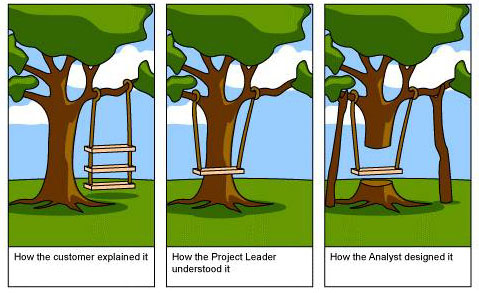
Check out my other ww: communications = perceptions
Posted in Wordless Wednesday | 6 Comments »
|
 Subscribe to
MAPping Company Success
About Miki 
Clarify your exec summary, website, etc.
Have a quick question or just want to chat? Feel free to write or call me at 360.335.8054
The 12 Ingredients of a Fillable Req
CheatSheet for InterviewERS
CheatSheet for InterviewEEs™
Give your mind a rest. Here are 4 quick ways to get rid of kinks, break a logjam or juice your creativity!
Creative mousing
Bubblewrap!
Animal innovation
Brain teaser
The latest disaster is here at home; donate to the East Coast recovery efforts now!
Text REDCROSS to 90999 to make a $10 donation or call 00.733.2767. $10 really really does make a difference and you'll never miss it.
And always donate what you can whenever you can
The following accept cash and in-kind donations: Doctors Without Borders, UNICEF, Red Cross, World Food Program, Save the Children
*/
?>About Miki
About KG
Clarify your exec summary, website, marketing collateral, etc.
Have a question or just want to chat @ no cost? Feel free to write
Download useful assistance now.
Entrepreneurs face difficulties that are hard for most people to imagine, let alone understand. You can find anonymous help and connections that do understand at 7 cups of tea.
Crises never end.
$10 really does make a difference and you’ll never miss it,
while $10 a month has exponential power.
Always donate what you can whenever you can.
The following accept cash and in-kind donations:
|