|
|
|
Monday, April 29th, 2019
Poking through 11+ years of posts I find information that’s as useful now as when it was written.
Golden Oldies is a collection of the most relevant and timeless posts during that time.
Back in the late 2000s, when blogs were newish, there was a thing called Wordless Wednesday. The idea was to present your thoughts on a subject with a picture, instead of words. Anyway, I came across this one and it fit so well with a post I’m working on I decided to make it this weeks Oldie.
Read other Golden Oldies here.
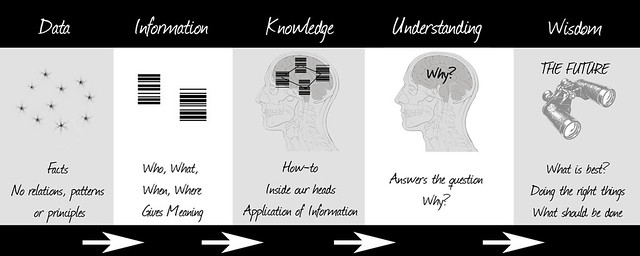
Image credit: Nick J Webb
Posted in Golden Oldies, Personal Growth | No Comments »
Thursday, October 25th, 2018

My life has been very busy as of late. I recently switched jobs and I also have a new arrival on the way.
My wife will be having what we are calling the grand finale baby. I currently have three girls and am being blessed with a little boy this time around. It’s an exciting and busy time but also hectic.
One item to tend to during this planning period is a name for our son. There are so many choices and feelings associated with names. Should we go traditional? Family oriented? Something unique but not too unique?
It’s been tough. With our girls it seemed to make sense when we came up with their names, with the little man not so much.
I have also begun observing my own actions as a father. With girls I have learned how to act. I feel comfortable and confident. I think that they will be such great companions for their little brother. He will be surrounded by dolls, pink and lots of love.
I think we have figured out a name that carries a legacy, but is also strong. Unique but not too much so.
It carries a family line and honors the past while looking to the future.
What’s in a name?
Image credit: chuttersnap on Unsplash
Posted in Personal Growth, Ryan's Journal | No Comments »
Friday, February 2nd, 2018

A Friday series exploring Startups and the people who make them go. Read all If the Shoe Fits posts here.
Over the years I’ve written about the value of reading books, most recently in a Golden Oldie just before Christmas. A few days later I was talking with a group of founders, all under 40, a couple of which follow this blog.
They took me to task for expecting them to have spare time to read. They said it was difficult enough finding the time to keep up with what was happening in their field and tech in general and that if they needed additional information on a subject they could google it.
When I commented that that kind of information didn’t lend itself to enlarging knowledge or encouraging thinking things got a bit heated. It was simpler to let them think I had backed down and change the subject than to subject the others to an argument.
And at that time I didn’t have the right ammunition to make my point, but now I do. Better yet, it’s courtesy of four of the most well-known thought leaders / influencers alive today.
“In my whole life, I have known no wise people (over a broad subject matter area) who didn’t read all the time — none. Zero.” — Charlie Munger, Self-made billionaire & Warren Buffett’s longtime business partner
Why did the busiest person in the world, former president Barack Obama, read an hour a day while in office?
Why has the best investor in history, Warren Buffett, invested 80% of his time in reading and thinking throughout his career?
Why has the world’s richest person, Bill Gates, read a book a week during his career? And why has he taken a yearly two-week reading vacation throughout his entire career?
Why do the world’s smartest and busiest people find one hour a day for deliberate learning (the 5-hour rule), while others make excuses about how busy they are?
Not only do they read, they read widely.
Successful people focus on both the tactical (daily) part of their business/lives, as well as the strategic (long(er)-term) part.
Blogs, media, conferences, etc., are tactical.
Books are strategic.
Image credit: HikingArtist
Posted in If the Shoe Fits, Personal Growth | No Comments »
Thursday, February 1st, 2018

The State of the Union address was on last night. I’ll be honest I, typically look forward to the event. There is pomp and circumstance, high drama, and the occasional surprise. To cap it off you get to have a speaker from the opposite party offer a rebuttal. Without fail the night can be informative and completely ridiculous in a single span of time. However it does offer a snapshot of both our ideals and fears.
As I thought after about the address, I thought I should take stock of my own Union. Am I living up to my potential, am I taking ownership over my life?
I’ll be honest, my assessment wasn’t that positive. I tend to take a dim view of my own accomplishments in life and try to downplay them. But the event was cathartic as well. When given a chance how often do we truly evaluate ourselves?
The company we work for can hold a lot of our identity. I’m not sure if that’s good or bad, but we spend a lot of our day at work and it dominates our time. Is that Union strong? What about your family relationships? Friends?
You may be asking, why the sobering talk? Quite simply it’s important to remove the blinders from time to time and truly look at life unfiltered. Take the time to look at your strengths and weaknesses and look for opportunities for growth. I can assure you everyone will be better for it.
One thing I learned this week is to set the example.
It sounds minor, but I tend to come in a few minutes late to work sometimes. Typically it’s because I’m grabbing a coffee or with my girls for a few minutes.
Today, my manager spoke to me about it and said he doesn’t care that I am late, but he needs me to set an example for some of the junior folks on the team.
It went from what could have been a discussion on a trivial matter to a coaching opportunity. And you know what, he was right!
And the Union is that much stronger for it.
What makes your union strong?
Image credit: ewe neon
Posted in Personal Growth, Ryan's Journal | No Comments »
Thursday, January 4th, 2018

The heart of a champion is measured not by their victories but by how they come back from defeat.
I may not have mentioned it before, but I am a University of Georgia grad and proud to be a Bulldawg!
My beloved college football team went into double overtime and defeated Oklahoma in this year’s Rose Bowl. That win propelled them to compete in the National Championship next week against Alabama. This is the first time in 38 years since UGA has competed for the title and I’m excited to see how they do.
Why do I bring this up you may ask? Well, for one thing, I am taking every chance I get to celebrate the great season my team is having. The second reason is that the current news is absolutely depressing and tends to drag me down.
One goal for the new year is to surround myself with positive people and mindsets. The news doesn’t fit into that.
I previously brought up failure and how it can transform or destroy someone. As mentioned, I attended UGA and graduated with a degree in Economics. One of the required courses was Finance 300, all business majors had to have it and it wasn’t the easiest of courses. I enrolled and about midway through I realized I was going to fail the class. Not even close to a C, a solid F.
I had a choice to make then and there. Stop attending and sleep in ( it was and 8am class) or continue on with zero stress, absorb and study and then retake it in the summer. I chose the latter and was very happy about it.
My professor saw that I continued attending and partaking in the class and I built a relationship with him. As a student it was great, I felt like I was auditing the class and was not worried about grades. When the summer rolled around I was able to master the course and finished with a B+.
I actually still look back at that time with fondness, even years later.
So much of our life can be full of regret, why not embrace the failure and learn from it?
I did and am sure you can as well.
Image credit: Josh Hallett
Posted in Personal Growth, Ryan's Journal | No Comments »
Thursday, December 14th, 2017
I attended a tech talk recently that was put on by the Tampa Bay Tech Garage here in Tampa, FL. Like most mid sized cities we have some thriving tech companies as well as startups.
The tech garage is an incubator that provides mentoring, work spaces and community to those that are growing their businesses. One way they facilitate this is by hosting talks with well established owners who can speak to their trials and successes, all in an effort to grow the tech community in our area.
Side note: if your reading this and you’re cold then consider the Tampa/St Petersburg area, it’s warm, full of sun and has a thriving community.
The discussion I attended centered on how failure is inevitable, but creates innovation and break-throughs if approached in the right way.
Our speaker was Chad Nuss, CEO of Inside Out, a sales innovation lab that teaches, tests and optimizes sales teams across the country. He had been the owner of several startups with successful exits and is just a great guy to be around. In his different roles he has also experienced epic failures that he had to learn from.
The topic was relevant in a lot of ways.
In tech we tend to say that revenue covers a multitude of sins. The evidence is there when you look at the Ubers or [insert any other money-losing company] of the moment.
Successful people also have epic failures, but if they are generating revenue it shouldn’t matter.
This is the wrong approach! It leads to us brushing off failure, burying our head in the sand and not learning. It is one reason you see companies have spectacular rises and sudden falls.
There is a better way.
Examining a failure in your life can be humbling, but also rewarding. You can learn from it, approach it differently next time, or achieve a breakthrough.
As I look at my own life I can count the many ways I have failed and repeated that same mistake again. I actually do not mind failing but I hate repeating that.
How often have you achieved a breakthrough or innovation after a failure?
What did you learn and how did you make it better?
As we go forward we shouldn’t fear failure, we should embrace it and grow.
Happy failing!
Flickr image credit: Jason Tester Guerrilla Futures
Posted in Personal Growth, Ryan's Journal | No Comments »
Thursday, November 16th, 2017

I was in New York this week to visit some clients, but also to conduct some formal sales training.
The client visits are always great because you get to uncover new insights and align with the common goals to achieve desired outcomes.
The same could probably be said of the training as well. You learn, ingest, and hope you improve to a desired outcome. Throughout the week, though, I was struck by the similarities between client visits and training.
The training we conducted was based on the challenger sales concept. Within that book the writers uncover certain traits that enable some sales reps to achieve greater results.
The key takeaway is to understand your client and be in a position to teach them rather than approaching them with a lot of questions. That’s a simplistic view, but even at that level it is a cultural shift for the company.
Sales reps are used to arriving, asking a bunch of questions and hoping some stick with the client. The usual result is a lot of wasted time for the client and lost revenue for the company.
Instead we need to approach it as a consultant who understands a broad set of issues affecting the industry in question and is able to deliver insights. This doesn’t happen overnight and it requires the whole organization to commit to the results.
What I learned through this process was the fact that you cannot just say you provide value. You must demonstrate and deliver it. The same can be said about life as with clients. You lose whenever you cannot be an asset to the organization.
Imagine if we showed up to life like that everyday? We would be crushing it regardless of what our job was. We would ensure success for ourselves, our family and friends.
I realize this week it seems to be a recap, but it’s been busy and there are a lot of moving parts. However I can fully appreciate the fact that with a little preparation we can make our lives easier.
Image credit: Connie
Posted in Personal Growth, Ryan's Journal | No Comments »
Wednesday, October 11th, 2017

A couple of weeks ago, in an aside in a post about transformation, I said, “(‘wise’ being very different than ‘smart’).”
Since then, I got a couple of phone calls (I love phone calls; that’s why my number is displayed on the blog.) wanting to discuss the difference.
They both suggested I share my thoughts here, in case anyone else was curious — my thoughts based on my experience. Feel free to disagree.
Smart isn’t about what you know — that’s knowledge.
Smart isn’t about innate intelligence — but about how you use it.
Smart is about what you do with what you learn, whether from books, experience, the streets, general human interactions, or all of the above.
Learning starts when you’re born and continues all your life — or it should.
Obviously, you’ll be better off if it does — and in deep doodoo if it doesn’t.
Wise is a whole different thing.
There is no guarantee you’ll ever become wise — no matter how much you learn or how smart you become.
Wise starts when you apply what you learn to various situations, but goes way beyond the application.
Wise comes from applying, tweaking, synthesizing and repeating over and over in multiple versions and situations.
Wise isn’t something you say about yourself on social media; it’s something that others say about you — eventually.
Wise isn’t fast; it happens over a long period of time — no instant gratification, except the pleasure that comes from knowing that what you figured out worked.
Finally, while you can learn from devices, they will never make you smart, let alone wise.
Image credit: arvind grover
Posted in Personal Growth | No Comments »
Wednesday, January 13th, 2016

Way back in 2008 I offered free coaching help to my readers.
I did it because I like hearing about the challenges bosses and workers are facing and I can often help them craft solutions.
Hearing from the people actually fighting the battles allows me to keep on learning — even when the subject is painful.
I said then that it was a standing invitation, which it still is, but I doubt that anyone has seen that post in years.
That’s why I’m making the offer again.
I hope you take me up on it, because, as I said then, the worst thing that can happen is that I can’t help, but you can still vent.
You can reach me at miki@rampupsolutions or feel free to call 360.335.8054.
I answer all calls or return them within 24 hours if I’m unavailable. (FYI, I have rotten hearing, so please slow down and enunciate — diction is no longer in fashion — and keep in mind that a hearing impairment does not affect intelligence or creative thinking.)
One other thought. This is not a ploy or gimmick to get new clients — in case that crossed your mind.
Posted in Personal Growth | No Comments »
Tuesday, January 27th, 2015

Looking for a perk or bonus for your people that won’t break the bank?
Consider paying for them to take a course that interests them at sites such as Pluralsight or Universal Class, whether career oriented or just of personal interest.
Because it’s a perk/bonus, it’s similar to providing movie tickets, i.e., while you choose the theater you don’t pick the movie.
It doesn’t matter if they want to learn a new programming language or how to make wine.
The point is it’s a reward, beyond normal compensation, for their hard work.
Yes, the classes provide them with new skills they may choose to apply elsewhere, but if they don’t have the opportunity to learn new skills, face new challenges or get bored they will leave anyway.
Providing learning opportunities won’t hasten the process; what it will do is give them reason to sing your praises as a great boss/company to work for in the event they do leave.
All of which will positively impact your street rep and improve/enhance your recruiting efforts.
Image credit: Eric Harrison
Posted in Ducks In A Row, Motivation, Retention | No Comments »
|
 Subscribe to
MAPping Company Success
About Miki 
Clarify your exec summary, website, etc.
Have a quick question or just want to chat? Feel free to write or call me at 360.335.8054
The 12 Ingredients of a Fillable Req
CheatSheet for InterviewERS
CheatSheet for InterviewEEs™
Give your mind a rest. Here are 4 quick ways to get rid of kinks, break a logjam or juice your creativity!
Creative mousing
Bubblewrap!
Animal innovation
Brain teaser
The latest disaster is here at home; donate to the East Coast recovery efforts now!
Text REDCROSS to 90999 to make a $10 donation or call 00.733.2767. $10 really really does make a difference and you'll never miss it.
And always donate what you can whenever you can
The following accept cash and in-kind donations: Doctors Without Borders, UNICEF, Red Cross, World Food Program, Save the Children
*/
?>About Miki
About KG
Clarify your exec summary, website, marketing collateral, etc.
Have a question or just want to chat @ no cost? Feel free to write
Download useful assistance now.
Entrepreneurs face difficulties that are hard for most people to imagine, let alone understand. You can find anonymous help and connections that do understand at 7 cups of tea.
Crises never end.
$10 really does make a difference and you’ll never miss it,
while $10 a month has exponential power.
Always donate what you can whenever you can.
The following accept cash and in-kind donations:
|