|
|
|
Monday, September 16th, 2019
Poking through 11+ years of posts I find information that’s as useful now as when it was written.
Golden Oldies is a collection of the most relevant and timeless posts during that time.
How time and tech fly. I wrote this in 2017 and there’s been a lot of change since then. In short, while hypocrisy has skyrocketed, with the advent of Uber, Lyft, We, and others profitability has fallen way behind. Greed, however, is alive and kicking butt — think We’s Adam Neumann.
Read other Golden Oldies here.
A Friday series exploring Startups and the people who make them go. Read all If the Shoe Fits posts here.
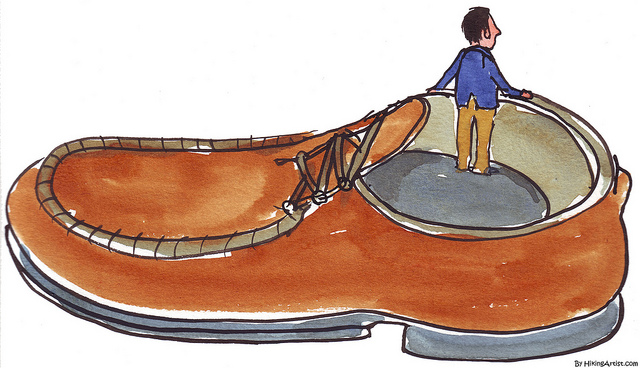
Tuesday I cited a post by Scott Belsky on Medium talking about how employees are often conned (my word) by founders, especially unicorns, when it comes to the wealth that is supposed to flow from their ISO.
As pithy as the post was, some of the comments were even pithier. I especially like this one from colorfulfool (21st comment)
If profitability were proportional to hypocrisy, there would be no failed startups in the Valley.
Not just true, but succinctly and elegantly stated.
Founders love to talk about the importance of transparency, trust and authenticity.
However, their stock plans and pitfalls thereof exhibit such a high degree of opaqueness and caveat emptor that they kick a hole the size of Texas in the fabric of the founders’ authenticity.
Another prevalent piece of hypocrisy is “change the world.”
Do you really believe that another dating app or being able to evaluate a new restaurant or another way to buy your groceries will change the world?
While they may impact one’s personal world, they certainly don’t have the impact of something like Mine Kafon.
What is proportional to the Valley’s hypocrisy is its sheer greed.
Actually, when I stop to think about it, the greed probably exceeds even the hypocrisy.
Image credit: HikingArtist
Posted in Compensation, Culture, Entrepreneurs, If the Shoe Fits | No Comments »
Monday, September 9th, 2019
Poking through 11+ years of posts I find information that’s as useful now as when it was written.
Golden Oldies is a collection of the most relevant and timeless posts during that time.
It’s said that money is the root of all evil, but there are plenty of evil people with no money and lots of wealthy people who do enormous good. I think it’s more accurate to say that greed is the root, since people will do anything to satisfy it. And often, what they do is perfectly legal — but legal doesn’t mean either ethical or moral.
Read other Golden Oldies here.
I’m no happier about the AIG and other bonuses paid to screwed up Wall Street banks, but I’m not sure why any of us are surprised.
“In the largest 25 corporate bankruptcies between 1999 and 2002, while hundreds of billions of dollars of investor wealth and over 100,000 jobs disappeared, the Financial Times found the “barons of bankruptcy” made off with $3.3 billion.”
Giant compensation packages, guaranteed bonuses and platinum parachutes are excused by Boards and executives as necessary to attract the “best and brightest,” but here’s what’s really going on.
The ‘names’ demand outsize compensation/stock options/guaranteed bonus/etc. in order to validate their ‘brand’.
Those responsible for hiring not only meet the demands, but even exceed them in an effort to attain or sustain the company’s reputation as a better home for ‘stars’ — the more stars you have the greater the bragging rights — mine’s bigger than yours in high school locker room talk.
Now let’s consider the folly of this attitude.
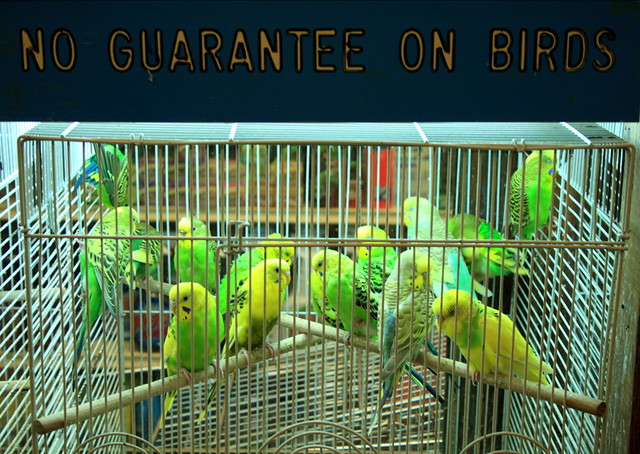
Those hiring often seek a name brand in the mistaken belief that the brand comes with a warranty that guarantees good results.
But no matter who you hire you’re actually paying for their past performance, which is always influenced by
-
- circumstances—boss and company positioning in its market and industry
- environment—culture and colleagues;
and let us not forget that minor factor
The hiring mindset is that everything the brand accomplished was done in a total vacuum and dependent only on the brand’s own actions, therefore changing every single surrounding factor will have no impact on performance.
Put like that it sounds pretty stupid, doesn’t it.
This is one of the prime reasons that so many CEOs bring their ‘own team’ over when they move, as do managers all the way down the food chain—they know they didn’t do it alone.
CEOs aren’t like movie and rock stars whose very names draw consumers into spending money—nobody ever bought a product from GE because Jack Welch was CEO, nor do they carry Jobs iPods—so why pay them that way?
Moreover, assuming that performance occurring during an expansion is a valid yardstick for performance in general, let alone a downturn, is sheer idiocy.
You have only to remember the difficulties faced by people whose management skills were honed between 1991 and 2000, the longest expansion in our history. When the recession hit in March of 2001 they had no experience whatsoever of how to drive revenue or manage in a down economy.
That recession and the previous one in 1990 lasted only 8 months each. The longest recession we’ve had was 2 years, January-July 1980 and July 1981-November 1982, and that one had a 12 month break in it. This means there are a very small number of managers with any actual experience managing in anything even close to what’s happening now.
The current recession officially started in December 2007, so it’s already 15 months old and the end isn’t in sight.
What experience makes these folks the ‘best and brightest’ for today’s world?
Just why the hell are companies still guaranteeing oversized compensation and exorbitant exit packages when now is definitely the time to pay for future performance—no guarantees.
Image credit: flickr
Posted in Compensation, Culture, Golden Oldies, Hiring, Motivation, Retention, Stock Options | No Comments »
Tuesday, July 9th, 2019

I’ve written before that Alphabet has no scruples about how its various parts make money as long as they do.
YouTube is the most obvious proof.
It wasn’t until major brands pulled their ads that YouTube cleaned up a tiny bit of its act.
YouTube has previously been forced to make major changes because of advertiser backlash. In 2017, hundreds of brands pulled their advertising from YouTube after The Times reported their ads were appearing next to extremist videos. Dubbed the “YouTube Adpocalypse,” the mass boycott cost YouTube’s parent company, Google, an estimated $750 million, a note from analysts at Nomura Instinet said at the time.
When a “soft-core pedophile ring” was exposed last February YouTube disabled comments on most videos featuring kids, but only because big advertisers walked.
More recently, in spite of concerns over breeches of child privacy, brands have stayed steady and YouTube has done nothing to change.
Nor will it.
Because YOU don’t matter
YOU are a user.
Content providers are users.
As Forrester analyst Renee Murphy says,
“Users are the product, not the customer.”
Brands are the customer.
And the customer is always right.
Image credit: Joegoauk Goa
Posted in Culture, Ethics | No Comments »
Friday, March 29th, 2019
A Friday series exploring Startups and the people who make them go. Read all If the Shoe Fits posts here.
Pundits and investors of all kinds, from lone angels to major VCs, say that your company’s culture is critical to its success.
Therefore, the most important question founders should ask themselves is what are my values?
Not what you say out loud, or agree to in order to fit in, or because they are good talking points, or to be PC.
You need to be brutally honest, at least with yourself, because, in the long run, whatever your values truly are will out.
Mark Zuckerberg claimed he wanted to do good by connecting people.
Larry Page and Sergey Brin wanted to organize the world’s information and “not be evil.”
But, in the long run, their top core value became obvious, echoing Gordon Geko’s, “Greed is good.”
Also long term, Andrew Wilkinson’s 2015 words reflect his values, I’m not a unicorn, I’m a horse.
Culture is based on founder values and sooner or later the real ones do surface.
This is where being “your authentic self” trips up a lot of people, not just founders.
Image credit: HikingArtist
Posted in Culture, Entrepreneurs, Ethics, If the Shoe Fits | No Comments »
Friday, May 11th, 2018
A Friday series exploring Startups and the people who make them go. Read all If the Shoe Fits posts here.
As I keep saying, I do love CB Insights daily newsletter. It provides me with needed information, but my love stems from Anand Sanwal’s quirky, irreverent, incisive comments, like this one.
I now see toothbrushes in a whole new light after this comment by the founder of a subscription-as-a-service toothbrush company.
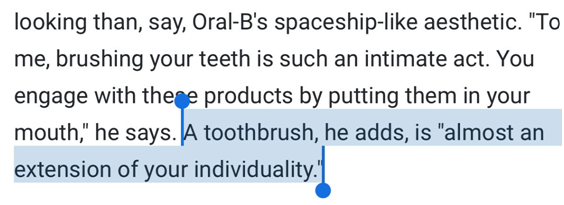
Does this guy actually believe that something (AKA a toothbrush) that has no wheels, software or circuits can substitute as an “extension of personality?”
The only “change the world” ethos I can find here is greed coupled with the ability to sucker people who are either too lazy, too incompetent or too busy on social media to take care of their basic necessities.
Good grief, is this the best the vaunted Silicon Valley innovation machine can produce?
Image credit: HikingArtist
Posted in Entrepreneurs, If the Shoe Fits, Innovation | No Comments »
Wednesday, April 18th, 2018
During the dark ages of the 1970s, 80s and into the 90s people who refrained from drinking soda, living on fast food and cooked for themselves, instead of relying on the convenience of processed foods, were disparaged.
I know, because I was one of them. We were called “health food nuts.”
That changed with the advent of research into sugar, the value of veggies and a more general understanding that health wasn’t an accident, but a personal responsibility based on your own choices.
In the 1980s the World Wide Web became ubiquitous and existing bulletin board systems, such as AOL, migrated to the web. The dot com boom saw the birth and growth of social media communities that were free — and everybody loves free.
The contemporary internet was built on a bargain: Show us who you really are and the digital world will be free to search or share.
People detailed their interests and obsessions on Facebook and Google, generating a river of data that could be collected and harnessed for advertising. The companies became very rich. Users seemed happy. Privacy was deemed obsolete, like bloodletting and milkmen.
That bargain led to a new kind of nut.
“Privacy nuts;” I’m one of those, too.
As with health food nuts, privacy nuts were pooh-poohed as Luddites, anti-progressive, alarmist party-poopers.
But as they say, that was then and this is now.
Most people, no matter how they access their news, are aware of the stunning breaches in Facebook’s security, especially the current Cambridge Analytica fiasco.
That also seemed to wake people up to what the privacy nuts have been warning about all along.
Zuckerberg, of course, claims he supports the privacy law Congress is considering, but covertly Facebook is lobbying against it, so his statement that he would offer EU controls globally is highly unlikely.
Never forget that for Facebook it’s all about money.
The power of the company’s ad platform comes from the ability it gives politicians, brands, real estate agents, nonprofits and others to precisely target people on its social networks.
Of course, it’s not just Facebook.
And while Congress runs hearings and the public freaks out Zuck, as he is called, still seems to believe that it’s not Facebook’s fault and what happened should be excused because the his vision is for it to be a force for good.
but change is unlikely to happen, since greed still rules.
After two days of questioning by American lawmakers, Facebook’s share price rose more than 5%—mostly on the first day of Zuckerberg’s testimony—boosting the tech company’s market value by more than $24 billion.
Finally, NEWYORKMAG.COM provided commentary from people who are far closer to both Zukerberg and Facebook. The interviews are a real wakeup call (if you still need one).
A Propaganda Engine ‘Unlike Any in History’: Q&A With Early Facebook Investor
A conversation with early Facebook investor Roger McNamee on propaganda, early warning signs, and why outrage is so addictive.
Image credit: Marco Paköeningrat
Posted in Communication, Culture, Ethics | No Comments »
Friday, January 27th, 2017
A Friday series exploring Startups and the people who make them go. Read all If the Shoe Fits posts here.
 Tuesday I cited a post by Scott Belsky on Medium talking about how employees are often conned (my word) by founders, especially unicorns, when it comes to the wealth that is supposed to flow from their ISO. Tuesday I cited a post by Scott Belsky on Medium talking about how employees are often conned (my word) by founders, especially unicorns, when it comes to the wealth that is supposed to flow from their ISO.
As pithy as the post was, some of the comments were even pithier. I especially like this one from colorfulfool (21st comment)
If profitability were proportional to hypocrisy, there would be no failed startups in the Valley.
Not just true, but succinctly and elegantly stated.
Founders love to talk about the importance of transparency, trust and authenticity.
However, their stock plans and pitfalls thereof exhibit such a high degree of opaqueness and caveat emptor that they kick a hole the size of Texas in the fabric of the founders’ authenticity.
Another prevalent piece of hypocrisy is “change the world.”
Do you really believe that another dating app or being able to evaluate a new restaurant or a better way to buy your groceries will change the world?
While they may impact one’s personal world, they certainly don’t have the impact of something like Mine Kafon.
What is proportional to the Valley’s hypocrisy is its sheer greed.
Actually, when I stop to think about it, the greed probably exceeds even the hypocrisy.
Image credit: HikingArtist
Posted in Compensation, If the Shoe Fits, Personal Growth, Stock Options | No Comments »
Friday, October 3rd, 2014
A Friday series exploring Startups and the people who make them go. Read all If the Shoe Fits posts here
Decades ago computer manufactures, such as IBM and DEC, created closed systems that wouldn’t/couldn’t talk to each other.
Apple chose to keep a closed system for years.
While closed systems seemed to enhance profitability, in the long-run the strategy failed to protect the companies from competition.
What closed systems did do was cost customers millions when, for business reasons, they had to be made to communicate.
Closed systems are back again only this time forcing compatibility is costing billions.
And it is you and I who will end up footing the cost.
Why?
Because this time the incompatibility is in the proprietary electronic medical records (EMR) systems that are mandated under the Affordable Care Act and, far more importantly, are an imperative for the health of the entire population.
The money in play is substantial; privately held Epic is one of the largest suppliers and its founder, Judith R. Faulkner, is supposed to be worth around $2.3 billion.
When you’re making that kind of money who worries about lives ruined or lost because of EMR incompatibility?
While the companies building incompatible systems are doing just fine, those who have to buy the systems aren’t—although size does make a difference.
The University of California Davis Health System has 22 specialists installing the technology so that doctors can share patient data between its Epic system and other internal systems, like the hemodynamic monitors in its critical care unit, or with some non-Epic systems outside the hospital. “We’re a huge organization, so we can absorb those costs,” said Michael Minear, the chief information officer at the U.C. Davis Health System. “Small clinics and physician offices are going to have a harder time.” (…) “The systems can’t communicate, and that becomes my problem because I cannot send what is required and I’m going to have a 1 percent penalty from Medicare,” Dr. Raghuvir B. Gelot said. “They’re asking me to do something I can’t control.”
What about regulators?
Regulators responded that interoperability was a “top priority” and that they recently set out a 10-year vision and agenda to achieve it, in an emailed statement from the Office of the National Coordinator for Health Information Technology. The office’s spokesman added that achieving interoperability “requires stakeholders to come together and agree on policy-related issues like who can access information and for what purpose.”
So much for regulators.
Perhaps Congress… No; that’s a really stupid thought.
I guess the only sure things in all this is that the entrepreneurs who created the incompatible systems will increase their net worth, US medical costs will continue to skyrocket and you and I will pay the bills.
Image credit: HikingArtist
Posted in If the Shoe Fits, Politics | No Comments »
Friday, August 1st, 2014
A Friday series exploring Startups and the people who make them go. Read all If the Shoe Fits posts here
I’ve been working with entrepreneurs since the 1980s.
Sadly, the mindset has changed significantly—and not for the better.
I’m not the only one who feels that way.
German designer Hartmut Esslinger, who met Steve Jobs in 1982 and told him “Apple’s products were incredibly ugly and wasteful in production,” puts it this way.
“There is a bubble where greed meets hype and fake: Too many want to get rich instead of doing something meaningful for mankind, something for progress, to improve life.”
“Greed meets hype and fake;” what a perfect description of so many apps with billion-plus valuations.
The question you need to ask yourself is, “does it fit mine?”
Image credit: HikingArtist
Posted in If the Shoe Fits | No Comments »
Monday, July 28th, 2014
 I doubt that a week goes by that I don’t think of the line from one of Shakespeare’s least memorable characters, Dick the butcher in Henry VI (Part 2). I doubt that a week goes by that I don’t think of the line from one of Shakespeare’s least memorable characters, Dick the butcher in Henry VI (Part 2).
It was Dick who said, “The first thing we do, let’s kill all the lawyers.”
While this rarely happens, it’s nice to see when legal greed gets its comeuppance as it did recently when a patent troll not only lost their case, but the judge shifted the cost to the plaintiff.
Lawyers can do a lot of good, too, especially when used creatively, the way Cincinnati Children’s Hospital Medical Center does.
In 2008, the hospital and the Legal Aid Society of Greater Cincinnati set up a medical-legal partnership, the Cincinnati Child Health-Law Partnership or Child HeLP.
In 2008 the hospital identified NY Group, a landlord that owned 18 buildings and consistently refused to fix issues that were health problems.
That’s where the lawyers come in because penny-pinching landlords don’t listen to “do-gooders” like social workers.
Child HeLP lawyers went after NY Group, even suing on behalf of one disabled child, forcing the repairs to be done quickly.
But their efforts didn’t stop there.
At the same time, NY Group was walking away from the buildings — Fannie Mae foreclosed on all 19 by the end of July. Legal Aid helped tenants to organize and have a voice in the foreclosure process — among other things, they wanted to make sure that the buildings remain subsidized housing.
Ultimately that pressure resulted in widespread repairs, and helped persuade Fannie Mae to sell the buildings to Community Builders, a Boston-based nonprofit that develops and operates good low-income housing (which is maintaining the subsidies). Reconstruction is about to start.
And because the approach works so well it is spreading across the country.
Perhaps it’s time to modify Shakespeare’s words to “First, let’s kill most of the lawyers.”
Hat tip to KG Charles-Harris for alerting me to the troll story.
Image credit: Cincinnati Children’s Hospital Medical Center
Posted in Culture, Ethics, Motivation | No Comments »
|
 Subscribe to
MAPping Company Success
About Miki 
Clarify your exec summary, website, etc.
Have a quick question or just want to chat? Feel free to write or call me at 360.335.8054
The 12 Ingredients of a Fillable Req
CheatSheet for InterviewERS
CheatSheet for InterviewEEs™
Give your mind a rest. Here are 4 quick ways to get rid of kinks, break a logjam or juice your creativity!
Creative mousing
Bubblewrap!
Animal innovation
Brain teaser
The latest disaster is here at home; donate to the East Coast recovery efforts now!
Text REDCROSS to 90999 to make a $10 donation or call 00.733.2767. $10 really really does make a difference and you'll never miss it.
And always donate what you can whenever you can
The following accept cash and in-kind donations: Doctors Without Borders, UNICEF, Red Cross, World Food Program, Save the Children
*/
?>About Miki
About KG
Clarify your exec summary, website, marketing collateral, etc.
Have a question or just want to chat @ no cost? Feel free to write
Download useful assistance now.
Entrepreneurs face difficulties that are hard for most people to imagine, let alone understand. You can find anonymous help and connections that do understand at 7 cups of tea.
Crises never end.
$10 really does make a difference and you’ll never miss it,
while $10 a month has exponential power.
Always donate what you can whenever you can.
The following accept cash and in-kind donations:
|