|
|
|
Archive for the 'Retention' Category
Tuesday, October 15th, 2019
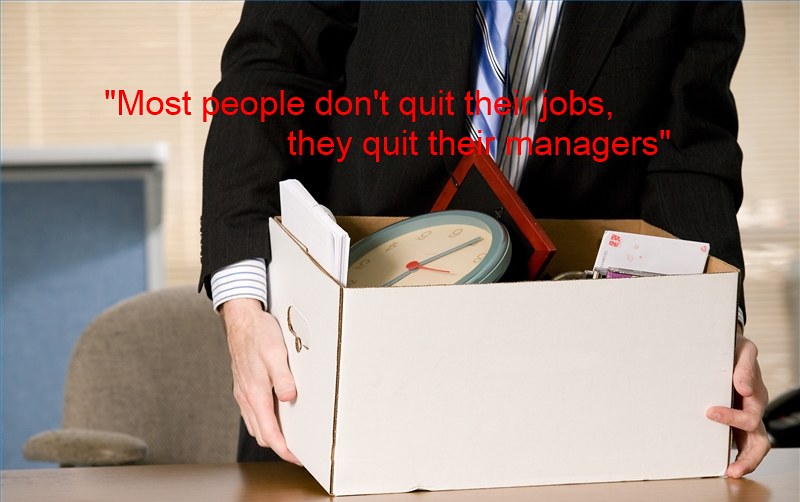
It’s said that people don’t leave companies, they leave bosses, but now and then it’s the top bosses, the ones who control the culture, who create the circumstances that incite an exodus, as opposed to an immediate manager.
That’s what’s going on at Google, according to James Whittaker, who left Microsoft for Google and then left Google to return there.
The Google I was passionate about was a technology company that empowered its employees to innovate. The Google I left was an advertising company with a single corporate-mandated focus.
Googlers have left because of harassment, retaliation, various governments’ contracts/projects, treatment of contractors, and other ethical considerations.
Google’s bosses are also some of the biggest hypocrites in tech. Worse even than Zuckerberg at saying one thing while doing the opposite covertly — especially something that negatively affects the entire planet, not just people’s privacy.
Despite making noises about becoming more environmentally friendly, Google has been quietly funding organizations which say climate change isn’t real [emphasis mine].
Fortunately, all the clandestine stuff keeps surfacing and people are coming to the realization that Google is anything but benevolent.
All these things fall under the culture umbrella.
A culture controlled by Google bosses.
Image credit: Nguyen Hung Vu
Posted in Culture, Ducks In A Row, Ethics, Hiring, Retention | No Comments »
Wednesday, October 2nd, 2019

There was a time when the words used in job ads actually made sense.
These days the words used seem to have little relation to either the skills needed or the opportunities offered.
For example, courage
Courage is mentioned in a variety of job postings for minimum wage retail and service work. Companies like JCPenney (where an ideal employee will “show the confidence and courage to do what’s right“), Ann Taylor (in which one “has the courage to know who she is“), and Lululemon (wherein a worker “leads with courage, knowing the possibility of greatness is bigger than the fear of failure“) ask for it specifically in job ads.
Does that mean the employee can expect a positive outcome if they have the courage to report their boss, another executive or a customer for harassment?
Then there are the companies looking for passionate workers.
Lisa Cohen, an associate professor of organizational behavior at McGill University’s Desautels School of Management shared that passion is a common attribute that companies she’s spoken with want, but they struggle to explain why.
“They haven’t defined the term,” she said. “They don’t know why it matters and probably what they’re looking for—and they’ll put this in not particularly nice terms—is somebody who’s going to work like crazy for long hours, right?”
Hiring for intangibles is smart, but it should be for traits that actually matter, as opposed to smoke and glitter.
Image credit: Robert Nunnally
Posted in Communication, Hiring, Motivation, Retention | No Comments »
Tuesday, September 24th, 2019
Last week we saw how the best places to work rankings change — Google was number one for six straight years, now it’s number eight, while Facebook dropped to seventh place.
People change too. Google CEO Sundar Pichai, who was named the world’s most reputable CEO in 2018, didn’t even make the top 10 this year.
Friends and family often aren’t aware of the most current news about a company and even when they are they may minimize it, especially if the company is hot or an icon.
This isn’t just about Google; Facebook, Amazon or dozens of others that are just as problematical.
Hot startups encourage you to jump in without due diligence. WeWork may seem like an extreme example, but it’s not as uncommon as you might think — remember Theranos, Uber and Zenefits.
It’s about how fast things change, both the big stuff and the little stuff, all the stuff that underlies culture and trust, which can and should affect your decisions.
Because it’s your career, your life and, corny as it may sound, your soul.
Image credit: chaukhat.com
Posted in Culture, Hiring, Motivation, Retention | No Comments »
Monday, September 23rd, 2019

Poking through 11+ years of posts I find information that’s as useful now as when it was written.
Golden Oldies is a collection of the most relevant and timeless posts during that time.
Knowing, understanding and accepting yourself is critical to major decisions, such as choosing a spouse/life partner/job. Ignoring or distorting any of the first three practically guarantees blowing the last three. As does ignoring or distorting the info gathered from your due diligence on the last three.
Read other Golden Oldies here.
There’s a very stupid myth that only the very talented are hired by startups and that the very talented only want to work for startups.
The corollary being that those who work for public companies, let alone large ones, probably aren’t all that talented and certainly not innovative/creative.
What a crock.
Another part of that myth is that working for a startup is the road to riches.
An even bigger crock.
The myth also says that the best place to work is a unicorn, such as or AirBnB, GitHub or Palantir,
And that is the biggest crock of all.
If you are looking for new opportunities and are dazzled by the idea of working at a unicorn I strongly suggest you read Scott Belsky’s post on Medium.
A company’s fate is ultimately determined by its people, so talent is everything. But this old adage bumps up against another one: cash is king (or runway is king, for a fast-growing private company). Without runway, talent takes off. So, it is no surprise that bold moves to extend runway (think late-stage financings at technically large valuations with some tricky liquidation preferences underneath) are done even if they could hurt the company (and its people) in the long run. This is especially true when these financings are ego-driven rather than strategic. The problem is, the employees at these companies don’t understand the implications.
But whether startup or Unicorn, this anonymous post on GitHub is a must read.
This is a short write-up on things that I wish I’d known and considered before joining a private company (aka startup, aka unicorn in some cases). I’m not trying to make the case that you should never join a private company, but the power imbalance between founder and employee is extreme, and that potential candidates would do well to consider alternatives.
The right place for you to work is the one that satisfies what you want — whether that’s the opportunity to work on bleeding edge technology, build a network, upgrade your resume or even plain, old curiosity.
The wrong place is the one you join with an eye to getting rich quick or for bragging rights.
Or because somebody says you “should.”
Image credit: Mike Mozart
Posted in Culture, Motivation, Personal Growth, Retention | No Comments »
Wednesday, September 18th, 2019

Next Monday’s Oldie is about what to look for when choosing a place to work, with a special caution for unicorns.
Today I thought we’d take a quick look at a “great place to work” myth.
Google topped the best places to work lists for years, but no more.
According to the 2019 Glassdoor survey Google is in 8th place based on 9186 reviews.
Last year 20,000 people walked out in protest over the handling of sexual harassment accusations and Google promised to do better.
But almost a year after the historic walkout, a dozen current and former Google employees told Recode that many employees are still justifiably afraid to report workplace issues because they fear retaliation. They say the company continues to conceal rather than confront issues ranging from sexual harassment to security concerns, especially when the problems involve high-ranking managers or high-stakes projects. …dozens more employees say that when they filed complaints with Google’s human resources department, they were retaliated against by being demoted, pushed out, or placed on less desirable projects.
… Google’s top-down culture that suppresses meaningful employee pushback — even in areas the company says it’s trying to improve on, like diversity.
To really find out about a company you need to do the same depth of due diligence on it that the company does on you.
That requires more than reading employee reviews; it means searching traditional media as well as proven new media.
And checking out who left and why.
Most of all it means making the time to just do it.
Image credit: Ben Nuttall
Posted in Culture, Hiring, Motivation, Retention | No Comments »
Tuesday, September 17th, 2019

I’m frequently accused about being badly out-of-date with current terms, let alone trendy ones, but I find myself using them even when they make me uncomfortable. That’s the case with “talent,” a term I’ve used, although it makes me squirm. This post from Wally Bock does a great job of explaining why. (I never really thought it through.) Thanks, Wally!
I’m sick of “talent.” I’m sick of wars for talent, and talent pipelines, and talent acquisition. I’m sick of talent anywhere it’s used as a substitute for people. People are not talent. People have talent. People are more than talent.
There’s no such thing as disembodied talent. Every bit of talent comes wrapped up in flesh and blood people.
People Are More Than Talent
People aren’t just talent. They bring you their hopes and fears. They bring their experience, expertise, and passions. Sure, their talent is important, but so are other things.
Their work ethic is important. The other people on your team want to work with someone who pulls their own weight. If you’ve got a slacker, even a talented one, you’ve got a problem.
Social skills matter. Nobody wants to work with or for a jerk. If you’ve got a talented person who can’t get along with other people, you’ve got a problem.
The situation matters. Context is critical. Talent is specific. If you’ve got a talented person in the wrong job, you have a problem.
Let’s quit talking about talent as if it’s some disembodied thing that we can bottle or store or (gag) develop. Instead, let’s think of talent as one of the many parts of those complex and wonderful people we work with.
Image credit: Three Star Leadership
Posted in Hiring, Retention | No Comments »
Wednesday, September 11th, 2019

Amazon is right up there when considering big tech Kool-Aid.
All by itself it has done more to addict consumers to near instant gratification, with no vision past themselves, than any other company.
In doing so it has actually killed people and ruined lives.
And it has done it in a way that shielded it from both notoriety and financial responsibility.
Rather than a synopsis and comments from me, take a few minutes to read the original ProPublica’s, in conjunction with The New York Times, investigative article.
This isn’t the first article detailing deplorable working conditions that have resulted in numerous walkouts by Amazon and contracted workers,
But the only walkout that would actually have an impact is a customer walkout.
Obviously, it’s unlikely that anyone will actually quit using Amazon.
But if just 1% of users stopped for just one week, Amazon would definitely sit up and take notice.
And if a higher percentage stopped even better.
Whether it’s Amazon, Uber or any of dozens of other companies whose business model is built on unfair/dangerous worker practices they need to step up and start taking responsibility for the actions of people who deliver their “experiences,” instead of claiming they are “independent contractors” while still controlling their daily actions at work.
Image credit: Mike Mozart
Posted in Ethics, Hiring, Retention | No Comments »
Monday, September 9th, 2019

Poking through 11+ years of posts I find information that’s as useful now as when it was written.
Golden Oldies is a collection of the most relevant and timeless posts during that time.
It’s said that money is the root of all evil, but there are plenty of evil people with no money and lots of wealthy people who do enormous good. I think it’s more accurate to say that greed is the root, since people will do anything to satisfy it. And often, what they do is perfectly legal — but legal doesn’t mean either ethical or moral.
Read other Golden Oldies here.
I’m no happier about the AIG and other bonuses paid to screwed up Wall Street banks, but I’m not sure why any of us are surprised.
“In the largest 25 corporate bankruptcies between 1999 and 2002, while hundreds of billions of dollars of investor wealth and over 100,000 jobs disappeared, the Financial Times found the “barons of bankruptcy” made off with $3.3 billion.”
Giant compensation packages, guaranteed bonuses and platinum parachutes are excused by Boards and executives as necessary to attract the “best and brightest,” but here’s what’s really going on.
The ‘names’ demand outsize compensation/stock options/guaranteed bonus/etc. in order to validate their ‘brand’.
Those responsible for hiring not only meet the demands, but even exceed them in an effort to attain or sustain the company’s reputation as a better home for ‘stars’ — the more stars you have the greater the bragging rights — mine’s bigger than yours in high school locker room talk.
Now let’s consider the folly of this attitude.
Those hiring often seek a name brand in the mistaken belief that the brand comes with a warranty that guarantees good results.
But no matter who you hire you’re actually paying for their past performance, which is always influenced by
-
- circumstances—boss and company positioning in its market and industry
- environment—culture and colleagues;
and let us not forget that minor factor
The hiring mindset is that everything the brand accomplished was done in a total vacuum and dependent only on the brand’s own actions, therefore changing every single surrounding factor will have no impact on performance.
Put like that it sounds pretty stupid, doesn’t it.
This is one of the prime reasons that so many CEOs bring their ‘own team’ over when they move, as do managers all the way down the food chain—they know they didn’t do it alone.
CEOs aren’t like movie and rock stars whose very names draw consumers into spending money—nobody ever bought a product from GE because Jack Welch was CEO, nor do they carry Jobs iPods—so why pay them that way?
Moreover, assuming that performance occurring during an expansion is a valid yardstick for performance in general, let alone a downturn, is sheer idiocy.
You have only to remember the difficulties faced by people whose management skills were honed between 1991 and 2000, the longest expansion in our history. When the recession hit in March of 2001 they had no experience whatsoever of how to drive revenue or manage in a down economy.
That recession and the previous one in 1990 lasted only 8 months each. The longest recession we’ve had was 2 years, January-July 1980 and July 1981-November 1982, and that one had a 12 month break in it. This means there are a very small number of managers with any actual experience managing in anything even close to what’s happening now.
The current recession officially started in December 2007, so it’s already 15 months old and the end isn’t in sight.
What experience makes these folks the ‘best and brightest’ for today’s world?
Just why the hell are companies still guaranteeing oversized compensation and exorbitant exit packages when now is definitely the time to pay for future performance—no guarantees.
Image credit: flickr
Posted in Compensation, Culture, Golden Oldies, Hiring, Motivation, Retention, Stock Options | No Comments »
Wednesday, August 28th, 2019

Over the last couple of days we’ve been looking at what makes workers happy.
We know it’s not fun and games or even money, so what?
Rather repeat the same stuff I’ve been saying for the last 11 years, consider what John Hall, co-founder and president of Calendar, says.
… workers aren’t liable to fall in love with a company over a handful of gimmicks and perks. … the things that really matter when it comes to sticking with an employer for a long time go deeper than decorations.
What are they?
Well, they aren’t rocket science — except to bosses whose heads are stuck in the past.
Here are four basic values, according to Hall (details at link), that are a good place to start.
- Democratic Values
- A Common Cause
- The Freedom to Fail
- A Culture of Improvement
See, not rocket science.
More about giving your team the same environment you wanted at some point in your working life.
Or maybe you just wanted to be promoted so you could treat your team as you’ve been treated by your own bad bosses.
My best recommendation is to look in the mirror long enough to decide which kind of a boss you want to be.
Image credit: Nichole Burrows
Posted in Culture, Hiring, Motivation, Retention | No Comments »
Monday, August 26th, 2019

Poking through 11+ years of posts I find information that’s as useful now as when it was written.
Golden Oldies is a collection of the most relevant and timeless posts during that time.
Why is happy so often equated with fun, as in “if you’re having fun you’re happy.” What makes you happy? A beautiful sunset? Your kids/grandkids? A quiet walk? Time with loved ones? For most people, It takes more substance than fluff to make them happy.
Read other Golden Oldies here.
Company culture has been jerked around ever since a few pundits decided that “fun” was the primary component to having happy employees.
Worse, “fun” was equated with silly stuff, such as games, pranks and goofs.
While these things do energize some employees, they don’t do it for long and certainly not alone.
It’s well-proven that happy employees are more productive, but creating happy requires substance.
The components of long-term happiness are things such as challenging work, continued learning, opportunities to grow, clear communications, fair bosses, etc.
All of these require more thought, effort and skill from managers than installing a few foosball tables or gamifying the project.
Flickr image credit: CityLineSouvenir
Posted in Culture, Ducks In A Row, Golden Oldies, Motivation, Retention | No Comments »
|
 Subscribe to
MAPping Company Success
About Miki 
Clarify your exec summary, website, etc.
Have a quick question or just want to chat? Feel free to write or call me at 360.335.8054
The 12 Ingredients of a Fillable Req
CheatSheet for InterviewERS
CheatSheet for InterviewEEs™
Give your mind a rest. Here are 4 quick ways to get rid of kinks, break a logjam or juice your creativity!
Creative mousing
Bubblewrap!
Animal innovation
Brain teaser
The latest disaster is here at home; donate to the East Coast recovery efforts now!
Text REDCROSS to 90999 to make a $10 donation or call 00.733.2767. $10 really really does make a difference and you'll never miss it.
And always donate what you can whenever you can
The following accept cash and in-kind donations: Doctors Without Borders, UNICEF, Red Cross, World Food Program, Save the Children
*/
?>About Miki
About KG
Clarify your exec summary, website, marketing collateral, etc.
Have a question or just want to chat @ no cost? Feel free to write
Download useful assistance now.
Entrepreneurs face difficulties that are hard for most people to imagine, let alone understand. You can find anonymous help and connections that do understand at 7 cups of tea.
Crises never end.
$10 really does make a difference and you’ll never miss it,
while $10 a month has exponential power.
Always donate what you can whenever you can.
The following accept cash and in-kind donations:
|