|
|
|
Archive for the 'Innovation' Category
Monday, August 19th, 2019
Poking through 11+ years of posts I find information that’s as useful now as when it was written.
Golden Oldies is a collection of the most relevant and timeless posts during that time.
There’s not a lot on TV that I like, but I used to really enjoy Shark Tank. Past tense; haven’t watched in several years. Why? Two words: lifestyle products. With very few exceptions that’s what was being presented, whether an app, a product or a service. I understand that entrepreneurs create stuff that will get funded, and while I’m not saying they are bad investments or that the entrepreneurs don’t mean well, I am saying that I don’t care about them. They won’t change the world or even improve it. Uber and Lyft are good examples; they haven’t decreased traffic, as they claimed they would, in fact, they’ve increased it. Most in the “life style” category are focused on “personal care.” (Have you noticed that sometime in the recent past “personal growth” morphed into “personal care”?) More packaging in the landfills, more time on the screen, more focus on self — so not my mindset.
Read other Golden Oldies here.
Innovation isn’t nearly as mind-boggling today when compared to what startups were doing in the late Seventies/early Eighties when I started working with them.
That’s not surprising when you consider who gets funded these days.
A recent Reuters report found that the majority of Silicon Valley startup founders that receive Series A funding come from the same pedigreed cohort: either they previously worked at a large, well-known tech firm, a well-connected smaller tech company, they previously created a successful startup, or they come from one of three universities—Stanford, Harvard, or MIT.
Not surprising when you consider the attitude of Valley stalwarts like Paul Graham of Y Combinator, who publicly stated that he would be unlikely to fund someone with a strong accent or a woman.
It’s been 15 years since I first wrote about the proclivity of managers to hire people like themselves and more over the years showing it leads to homophily and the negative impact that has on a company.
It seems it’s no different for investors.
They are funding people like themselves who were raised, educated and worked along paths similar to their own who they either know or are introduced to them by a friend.
“Like a lot of the investments [Instacart] that have come our way, a friend of a friend talked to us about it, and told us about it, and encouraged the founder and the CEO to come and chat with us. One thing led to another.” –Sequoia partner Mike Moritz
When you fund from a homogenous group, no matter where they are, creativity and innovation are watered down, because those groups tend to be insular and badly interbred talking mostly to each other.
If you’re fishing from a pond of rich white guys, you’re mostly going to get ideas that address the needs of rich white guys.
AKA, people like themselves.
Image credit: Frits Ahlefeldt
Posted in Entrepreneurs, Golden Oldies, If the Shoe Fits, Innovation | No Comments »
Tuesday, August 13th, 2019

As quoted in yesterday’s Golden Oldie, Columbia law professor Tim Wu said, Convenience and monopoly seem to be natural bedfellows.
His premise is that the more convenient something is, e.g., Amazon, the more likely people will gravitate to it, rather than trying something new.
Think about it.
Amazon. Facebook. Google. Microsoft.
Over the years, many companies, from startups to giants, have challenged them and have either been bought, bankrupted or buried.
Either can be a solution when your resources are almost unlimited, whether the money is spent on acquisition or increasing convenience.
Simple as 1-2-3-4
More convenience = stronger addiction = fewer competitors = greater monopolistic actions.
So the next time you find yourself concerned or complaining about the power of big tech try looking in the mirror for its source.
Image credit: Alena Navarro- Whyte
Posted in Entrepreneurs, Innovation, Personal Growth | No Comments »
Monday, August 12th, 2019
Poking through 11+ years of posts I find information that’s as useful now as when it was written.
Golden Oldies is a collection of the most relevant and timeless posts during that time.
Good, bad or silly, ideas for products are generated in response to a problem or need. It doesn’t matter if the problem/need only exists in the entrepreneur’s mind (think Jucerio), it’s still the driving force behind creating whatever. So what happens when there are no perceived problems? When the current whatever is treated as THE solution? Innovation takes a nosedive and monopolies thrive.
Read other Golden Oldies here.
I’m not sure whether to laugh or cry when I see ads for stuff that responds to voice command, especially when it’s for stuff like changing the TV channel. I guess that using the remote takes either too much energy or too much intelligence to work it.
Everything today is about convenience, a trend I’ve been suspicious of, although I wasn’t sure why.
However, after reading an op-ed piece by Tim Wu, a law professor at Columbia and the author of “The Attention Merchants: The Epic Struggle to Get Inside Our Heads,” called The Tyranny of Convenience I’m starting to understand what about it makes me itch.
In the developed nations of the 21st century, convenience — that is, more efficient and easier ways of doing personal tasks — has emerged as perhaps the most powerful force shaping our individual lives and our economies.
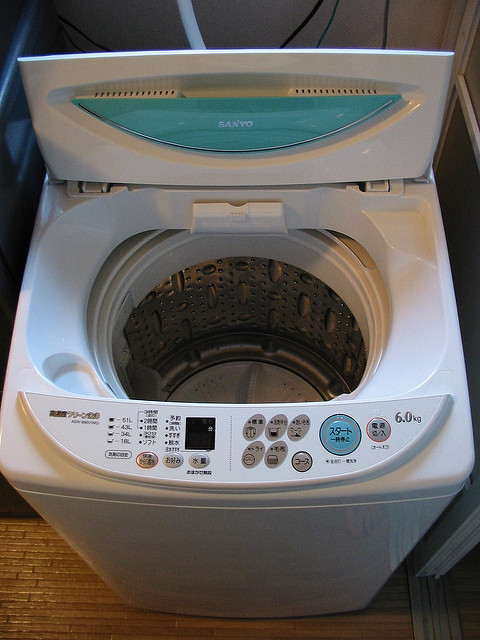
Granted I’m known as a digital dinosaur, but there are some conveniences — washing machines, telephones, cars, email, and Skype chat, among them — I’m all for — although I see no reason they need to be smart .
However, I have no cell phone, avoid any app, service, etc., provided by Google, clean my own house, wash my own clothes, shop for my own food, and do my own cooking just as I’ve done since I was 18.
I search using startpage.com, no ads, no tracking and my life functions just fine without always being connected. I’m not on social media and don’t suffer from FOMA; I meet friends for meals and fun and we talk on the phone in-between.
I suppose that all sounds very inconvenient these days, but I’m never bored and enjoy the feelings of accomplishment that come with doing stuff yourself, as well as figuring out better ways to do it — it’s called ingenuity.
I’ve seen many “convenient” items come to market years after I came up with a similar approach to use for myself.
Americans say they prize competition, a proliferation of choices, the little guy. Yet our taste for convenience begets more convenience, through a combination of the economics of scale and the power of habit. The easier it is to use Amazon, the more powerful Amazon becomes — and thus the easier it becomes to use Amazon. Convenience and monopoly seem to be natural bedfellows (emphasis mine).
Professor WU (or someone) needs to do a follow-up article entitled, “How Convenience Killed Creativity and Strangled Entrepreneurship.
Image credit: jim212jim
Posted in Entrepreneurs, Innovation, Personal Growth | No Comments »
Wednesday, July 10th, 2019

Do ads for smart stuff excite you?
Do you lust for a smart refrigerator, smart doorbell or some other smart product?
Do you want a smart home?
What about a smart city?
We already have a smart electric grid.
What do they all have in common?
They can be hacked.
It’s something to think about.
Smart = hackable.
Hacking a personally owned smart device is bad, but it pales in comparison to what happens if (when) the grid is hacked, whether by a foreign power or civilians for ransom.
Ukraine’s power was hacked in 2015, but old technology saved it from a far worse outcome.
A bill introduced in 2016 has been working its way through the US Congress. It would require similar old tech for US power grids. The bill provides a study period, so it will be 2020 before anything actually happens.
The old tech is actually the only solution that is immune to cyber/digital attacks of any kind.
Can you guess what it is?
If you guessed analog/manual/human give yourself a gold star. If you are under 40 you get five gold stars.
“Specifically, it will examine ways to replace automated systems with low-tech redundancies, like manual procedures controlled by human operators,” said US Senators Angus King (I-Maine) and Jim Risch (R-Idaho), who introduced the bill on the Senate floor in 2016. (…) The US is very close to improving power grid security by mandating the use of “retro” (analog, manual) technologies on US power grids as a defensive measure against foreign cyber-attacks that could bring down power distribution as a result.
Are you surprised? I’m not.
I always thought hooking the power grid up to the hackable internet was a dumb idea.
Kind of like locking your house and then taping spare keys to the doorframes.
Now we’ll spend millions on these “improvements.”
Stupidity really does rule.
Image credit: Midnight Believer
Posted in How Stupid Can You Get, Innovation | No Comments »
Wednesday, June 26th, 2019

Every day seems to bring more bad news from the AI front.
Google gives away tools for DIY AI, with no consideration for who uses them or for what.
One result is the proliferation of deepfakes.
Now scientists from Stanford University, the Max Planck Institute for Informatics, Princeton University, and Adobe Research are making faking it even simpler.
In the latest example of deepfake technology, researchers have shown off new software that uses machine learning to let users edit the text transcript of a video to add, delete, or change the words coming right out of somebody’s mouth.
The result is that almost anyone can make anyone say anything.
Just type in the new script.
Adobe, of course, plans to consumerize the tech, with a focus on how to generate the best revenue stream from it.
It’s not their problem how it will be used or by whom.
Yet another genii out of the box and out of control.
You can’t believe what you read; you can’t believe what you read or hear; it’s been ages since you could believe pictures, and now you won’t be able to believe videos you see.
All thanks to totally amoral tech.
Werner Vogels, Amazon’s chief technology officer, spelled out tech’s attitude in no uncertain terms.
It’s in society’s direction to actually decide which technology is applicable under which conditions.
“It’s a societal discourse and decision – and policy-making – that needs to happen to decide where you can apply technologies.”
Decisions and policies that happen long after the tech is deployed — if at all.
Welcome to the future.
Image credit: Marion Paul Baylado
Posted in Culture, Ethics, Innovation | No Comments »
Tuesday, June 25th, 2019

I’ve written before that AI is biased for the same reason children grow up biased — they both learn from their parents.
In AI’s case its “parents” are the datasets used to train the algorithms.
The datasets are a collection of millions of bits of historical information focused on the particular subject being taught.
In other words, the AI learns to “think”, evaluate information and make judgments based on what has been done in the past.
And what was done in the past was heavily biased.
What does that mean to us?
In healthcare, AI will downgrade complaints from women and people of color, as doctors have always done.
And AI will really trash you if you are also fat. Seriously.
“We all have cultural biases, and health care providers are people, too,” DeJoy says. Studies have indicated that doctors across all specialties are more likely to consider an overweight patient uncooperative, less compliant and even less intelligent than a thinner counterpart.
AI is contributing significantly to the racial bias common in the courts and law enforcement.
Modern-day risk assessment tools are often driven by algorithms trained on historical crime data. (…) Now populations that have historically been disproportionately targeted by law enforcement—especially low-income and minority communities—are at risk of being slapped with high recidivism scores. As a result, the algorithm could amplify and perpetuate embedded biases and generate even more bias-tainted data to feed a vicious cycle.
Facial recognition also runs on biased AI.
Nearly 35 percent of images for darker-skinned women faced errors on facial recognition software, according to a study by Massachusetts Institute of Technology. Comparatively lighter-skinned males only faced an error rate of around 1 percent.
While healthcare, law and policing are furthest along, bias is oozing out of every nook and cranny that AI penetrates.
As usual, the problem was recognized after the genie was out of the box.
There’s a lot of talk about how to correct the problem, but how much will actually be done and when is questionable.
This is especially true since the bias in AI is the same as that of the people using it it’s unlikely they will consider it a problem.
Image credit: Mike MacKenzie
Posted in Culture, Ethics, Innovation | No Comments »
Monday, June 17th, 2019
Poking through 13+ years of posts I find information that’s as useful now as when it was written.
Golden Oldies is a collection of the most relevant and timeless posts during that time.
This post and the quote from the FTC dates back to 2015. Nothing on the government side has changed; the Feds are still investigating and Congress is still talking. And as we saw in last weeks posts the company executives are more arrogant and their actions are much worse. One can only hope that the US government will follow in the footsteps of European countries and rein them in.
Read other Golden Oldies here.
Entrepreneurs are notorious for ignoring security — black hat hackers are a myth — until something bad happens, which, sooner or later, always does.
They go their merry way, tying all manner of things to the internet, even contraceptives and cars, and inventing search engines like Shodan to find them, with nary a thought or worry about hacking.
Concerns are pooh-poohed by the digerati and those voicing them are considered Luddites, anti-progress or worse.
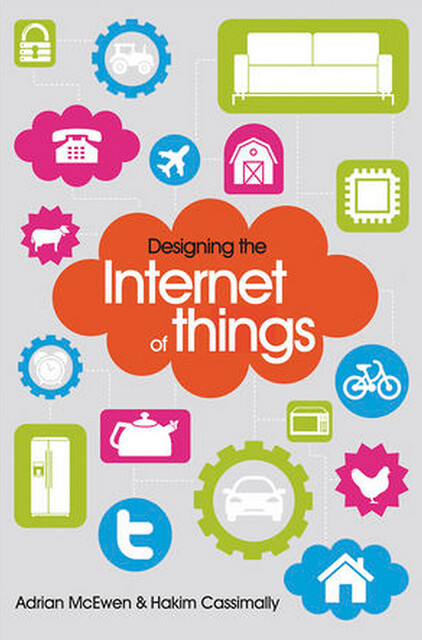
Now Edith Ramirez, chairwoman of the Federal Trade Commission, voiced those concerns at CES, the biggest Internet of Things showcase.
“Any device that is connected to the Internet is at risk of being hijacked,” said Ms. Ramirez, who added that the large number of Internet-connected devices would “increase the number of access points” for hackers.
Interesting when you think about the millions of baby monitors, fitness trackers, glucose monitors, thermostats and dozens of other common items available and the hundreds being dreamed up daily by both startups and enterprise.
She also confronted tech’s (led by Google and Facebook) self-serving attitude towards collecting and keeping huge amounts of personal data that was (supposedly) the basis of future innovation.
“I question the notion that we must put sensitive consumer data at risk on the off chance a company might someday discover a valuable use for the information.”
At least someone in a responsible position has finally voiced these concerns — but whether or not she can do anything against tech’s growing political clout/money/lobbying power remains to be seen.
Image credit: centralasian
Posted in Entrepreneurs, Ethics, Golden Oldies, Innovation | No Comments »
Wednesday, May 15th, 2019
Remember Juicero? The company that, in three years (2014-2017), burned through $120 million of venture funds building a $700 juicer requiring a special juice packet for each glass.
Following in that product’s footsteps, robotics company Vincross is planning to apply some of their consumer product knowledge to create a new product that is the equivalent of the Jucerio, except it will probably cost more.
The HEXA Plant is designed to look like a six-legged spider and can help anyone keep up with their plants even if they don’t have time to keep up with them. (…) Not only will the planter carry itself into the sunlight when needed – but it will find shade if the plant gets too hot. (…) The robotic planter is designed to stomp around or throw ‘tantrums’ when it is out of water…
The original HEXA robot sells for $949, so it’s unlikely the planter will cost less.
Here’s the robot, use your imagination to turn it into a plant pot.
And start saving, so you can finally have a plant that doesn’t die.
Video credit: HEXA
Posted in Entrepreneurs, How Stupid Can You Get, Innovation | No Comments »
Friday, April 12th, 2019
A Friday series exploring Startups and the people who make them go. Read all If the Shoe Fits posts here.
Obviously, opportunity and entrepreneurs go together.
There are dozens, if not hundreds, of opportunities that could serve as the basis for a company.
It is a wise entrepreneur who at least tries to consider the long-tern implications of the opportunity they choose.
Not just the financial potential, but the possible effects on society and the world.
While no one can see the future, there is one thing you can count on happening.
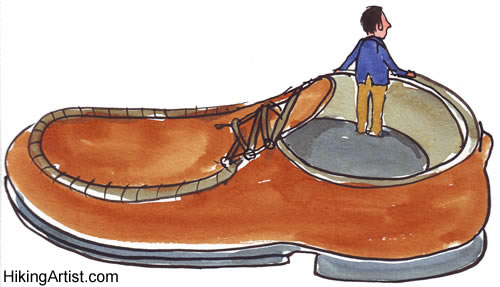
Humans will act the same way online as they do in the real world — only more so.
More so, because they can indulge their worst thoughts/desires with little-to-no chance of repercussions and a much broader reach.
Anything that has ever been done offline will be done — more so.
Political dirty tricks will get dirtier, bullying will be more vicious, the haters will be more active, and on and on.
Could Mark Zukerberg have foreseen this when he started Facebook?
Maybe not.
Did he try?
Probably not.
Did he even stop to think?
Unlikely.
Does he think about it now?
Only to deny it.
Image credit: HikingArtist
Posted in Entrepreneurs, If the Shoe Fits, Innovation | No Comments »
Friday, February 8th, 2019
A Friday series exploring Startups and the people who make them go. Read all If the Shoe Fits posts here.
I love the story of startup Be My Eyes, because it highlights an entrepreneur who really is changing the world and illustrates the good that comes from a lack of funds.
I read the story in the Lean Startup blog and thought it worth sharing.
“Be My Eyes is just a simple app that basically makes a video call between two persons (…) we have volunteers who sign up and say ‘Yes, I am available to help a blind person see something.’”
The volunteer presence adds an extra layer of independence to the visually impaired person’s life, rather than worrying that they are interrupting or imposing on someone.
All the volunteers do it look at their screen and tell the caller what they see, such as the ingredients in a recipe.
Be My Eyes boasts a global network of volunteers speaking a variety of languages and is always recruiting more.
The great thing is the volunteers can respond from wherever they are and the calls only take a few minutes. If they can’t take the call, no problem, since the system calls multiple people for each request.
Be My Eyes has a number of programs to encourage company involvement, including a way to provide product support to vision impaired/blind customers. This is a great opportunity for startups that want to give back, but have neither time or money to donate.
As to the advantage of minimal funding, it kept them from the typical tech error of over-engineering and forced them to keep the app very simple. Good move.
They had an overly long list of features they wanted to put into the app in the beginning, but which lack of funds prevented. (…) Be My Eyes hasn’t had many requests for all the “brilliant ideas” they had in the beginning. “So maybe it was a really good thing we didn’t overload the app.”
Be it as an individual or involving your family, friends or company be someone’s eyes, you’ll be amazed at the difference doing so will make in your life, as well as theirs.
Image credit: HikingArtist
Posted in Entrepreneurs, If the Shoe Fits, Innovation, Role Models | No Comments »
|
 Subscribe to
MAPping Company Success
About Miki 
Clarify your exec summary, website, etc.
Have a quick question or just want to chat? Feel free to write or call me at 360.335.8054
The 12 Ingredients of a Fillable Req
CheatSheet for InterviewERS
CheatSheet for InterviewEEs™
Give your mind a rest. Here are 4 quick ways to get rid of kinks, break a logjam or juice your creativity!
Creative mousing
Bubblewrap!
Animal innovation
Brain teaser
The latest disaster is here at home; donate to the East Coast recovery efforts now!
Text REDCROSS to 90999 to make a $10 donation or call 00.733.2767. $10 really really does make a difference and you'll never miss it.
And always donate what you can whenever you can
The following accept cash and in-kind donations: Doctors Without Borders, UNICEF, Red Cross, World Food Program, Save the Children
*/
?>About Miki
About KG
Clarify your exec summary, website, marketing collateral, etc.
Have a question or just want to chat @ no cost? Feel free to write
Download useful assistance now.
Entrepreneurs face difficulties that are hard for most people to imagine, let alone understand. You can find anonymous help and connections that do understand at 7 cups of tea.
Crises never end.
$10 really does make a difference and you’ll never miss it,
while $10 a month has exponential power.
Always donate what you can whenever you can.
The following accept cash and in-kind donations:
|